Tucson AZ Overpressure Event
Earlier this month, Chief Billy Goldfeder examined an incident involving an overpressure event that occurred in May 2025 in Tucson, Arizona. The initial response was a single company dispatched to an unknown type fire near East 22nd Street and South County Club Road. Arriving at the reported location, they observed light smoke showing from the eaves an abandoned gas station and requested a first alarm response.
Figure 1. Alpha/Delta Corner
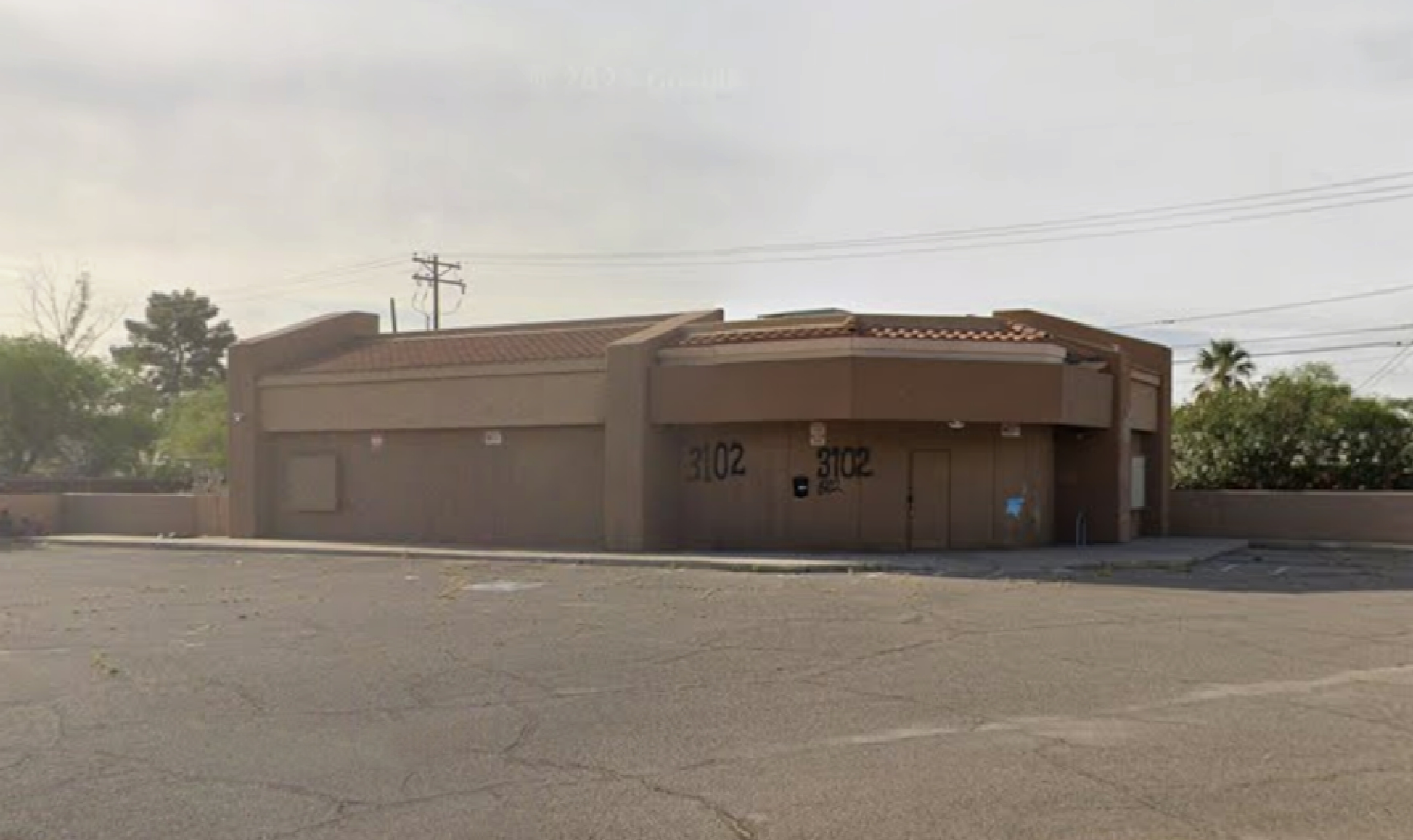
Adapted from Google. (2025). [Street view 3102 E 22nd Street, Tucson, AZ]. ©2025 Google. https://bit.ly/3KYFSyF.
Figure 2. Alpha/Delta Corner 3D
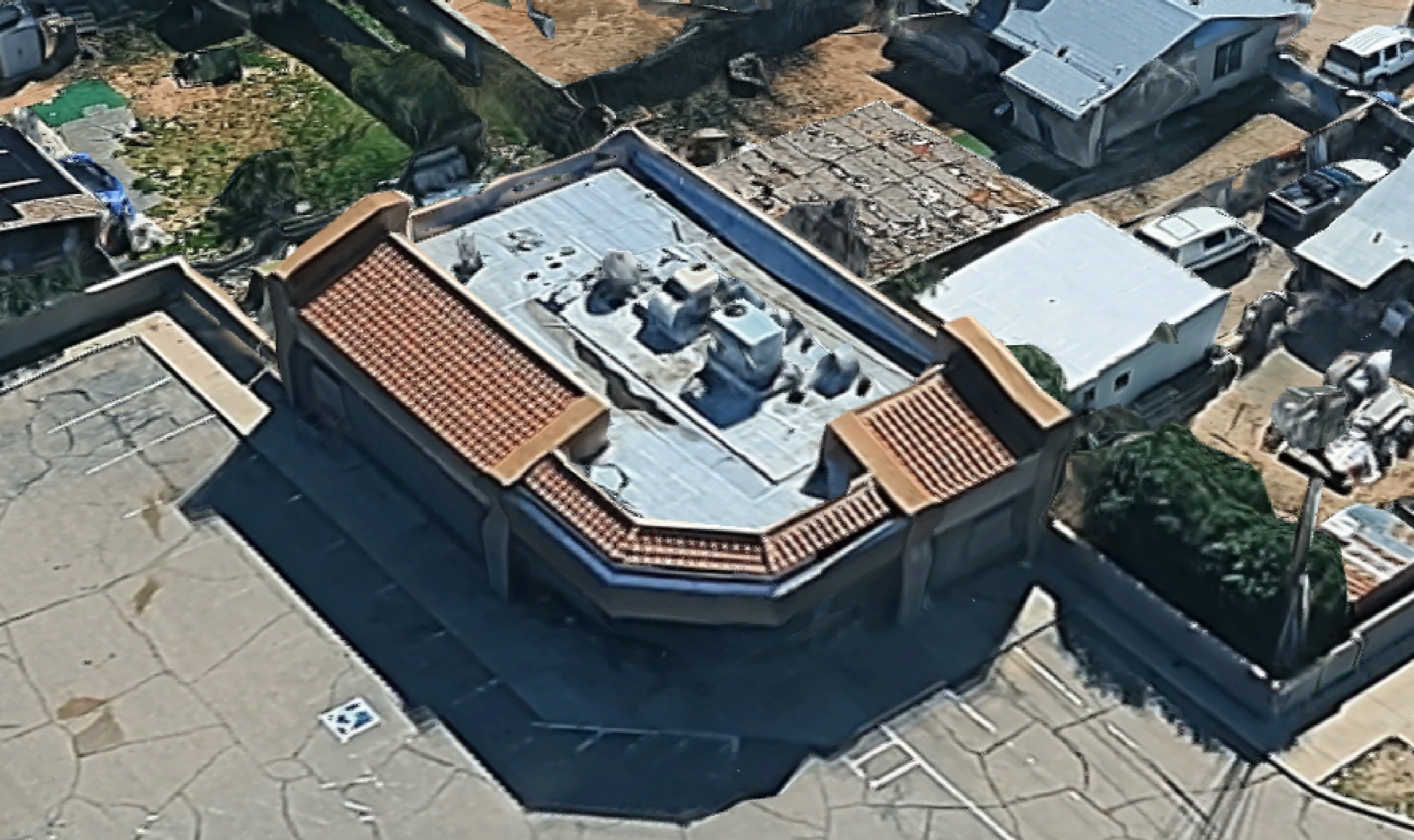
Note: Adapted from Google. (2025b). [Aerial view 3102 E 22nd Street, Tucson, AZ]. Imagery © Google, Imagery © Vexcel Imaging, US Inc. Map Data © 2025. https://bit.ly/3Wmd5Xa.
Incident Overview
In Close Calls: Lack of Consideration of Flow Path Puts Firefighters in Danger, Chief Goldfeder’s (2025) examination of the Tucson incident, he provided a concise summary of incident operations. One company made entry through Side Alpha while another company accessed the roof to perform an “attic reset” by applying water into the attic using a piercing nozzle. The exterior door used for entry on the windward side of the building was blocked open. Chief Goldfeder reported that the wind speed was approximately 12 mph. The interior company was unable to locate the fire and opened a 3’ x 3’ section of ceiling. Conditions on the exterior worsened considerably with increased volume and velocity of smoke discharge. At this point the IC ordered companies to withdraw from the interior and roof. Shortly after this order, an overpressure event occurred. The Tucson Fire Department (2025) also produced a video titled Smoke Explosion/Backdraft Tucson Fire Close Call that provided a solid look at this incident. The video identified that this event occurred before the company on the roof was able to apply water into the attic.
In his description of this incident, Chief Goldfeder made the following statement:
Within moments, while the crew that was on the roof was about to perform the attic reset, there was a smoke explosion [emphasis added]: an immediate ignition of a pocket of gas (smoke) that’s at its flash point [emphasis added] that causes a rapid surge (expansion) of the remaining gases.
Issues and Misconceptions
There are a couple of things to think about related to Chief Goldfeder’s statement. First, while the phenomena of backdraft and smoke explosion are distinctly different in phenomena, they can have similar critical cues and are often difficult if not impossible to differentiate on the fireground (more n this in a bit). Second, the term “flash point” relates to flammable and combustible liquids” and is unrelated to products of combustion and pyrolysis that are involved in a smoke explosion or backdraft. NFPA 30 defines flash point as “the minimum temperature of a liquid at which sufficient vapor is given off to form an ignitable mixture with the air, near the surface of the liquid or within the vessel used.” (NFPA, 2024). For more on flash point, see What Is an Ignitable Liquid and How Is It Classified? where NFPA Technical Services Engineer Roben Zevotek, (2024) provides an excellent, accessible explanation of flash point and how it applies to flammable and combustible liquids.
One of the key differentiating factors in occurrence of a backdraft is that this phenomena involves an increase in ventilation when the smoke (fuel)/air mixture is rich. On the other hand, a smoke explosion occurs when the smoke (fuel)/air mixture is within its flammable range and does not necessarily require a change in ventilation. However, both backdraft and smoke explosion can be described as “overpressure events” (Fleischmann & Madrzykowski).
Critical Factors
There are several interesting factors to consider when studying this incident:
- Wind Speed and Direction: Chief Goldfeder reported a wind speed of approximately 12 mph, but historical weather records indicate that the wind speed in the area was slightly higher with gusts to 22 mph during the timeframe of the incident (Weather Underground, 2025). Potential for wind to influence fire behavior increases directly with wind speed. When wind speeds exceed a gentle breeze (8-12 mph) consider the potential for a wind impacted or wind driven fire (Kerber & Madrzykowski, 2009 & Madrzykowski & Kerber, 2009). In this incident, the company operating on the interior entered from up wind which is generally better than entering on the downwind side of the fire, but pressurization of the building by the wind without adequate exhaust can also have a negative impact on fire behavior.
- Lack of Flow Patch Control: The entry door on the windward side of the building was blocked open allowing air intake and pressurization of the building during interior operations. Opening the ceiling to access the fire may have allowed air flow from the doorway to the involved void spaces above the ceiling (with exhaust through normal building leakage and the hole made in the roof for water application). While making a small opening to insert a piercing nozzle increased the total area of the exhaust openings, it is unlikely that this was sufficient to result in occurrence of the overpressure event (in and of itself).
- Lack of Water Application into the Involved Void Spaces: The tactic of applying water into the involved void spaces using a piercing nozzle can be an effective tactic to address the conditions presented in this incident. Unfortunately, in this incident, changes in fire behavior that were likely precipitated by changes in the flow path (door opening and pulling ceiling) occurred prior to effective application of water into the involved void spaces.
Potential for an Overpressure Event
Fleischmann, Madrzykowski, and Dow, (2024) identify several interrelated indicators of potential for an overpressure event (OPE) including:
- Fire in significantly ventilation limited compartments, such as attics or void spaces, increase the potential for an overpressure event such as a smoke explosion or backdraft.
- The potential for an overpressure event is increased once the fire has spread to where large surface areas of smoldering fuel, such as wood, are involved. This indicator may be combined with severely ventilation limited compartments when the fire is in an attic or void space with combustible linings.
- Pulsing air flow, with smoke pushing out alternating with air in at ventilation openings may be an indicator of potential for an overpressure event such as a smoke explosion. Note that this is also an indication of potential for a backdraft if there is a change in the ventilation profile.
- An overpressure event can occur without any change in ventilation. This is a significant difference between a smoke explosion and backdraft.
Indicators of a Potential Overpressure Event (OPE)
Watch the incident video posted by the Tucson Fire Department (2025) and observe the Building, Environment, Smoke, Air Track, Heat, and Flame (BE-SAHF) indicators. What cues to you see that might indicate potential for an overpressure event?
Read the discussion of Dave Dodson’s thoughts on this incident in Chief Goldfeder’s (2025) article. Does this make sense (or not)? Think about the configuration of the void spaces (Building), wind speed and direction (Environment), location, color, and optical density of smoke discharge (Smoke), and velocity of smoke discharge which differs based on location (Air Track). While you do not have a thermal image of the building from the exterior (and do not have x-ray vision), can you visualize fire development and conditions in the void spaces?
Understanding and Mitigating the Risk
It is essential to maintain a balanced perspective. While backdrafts and smoke explosions are a hazard and present risk to firefighters operating at a structure fire, occurrence of these phenomena is rare. Understanding the mechanisms underlying these fire behavior phenomena, the requisite preconditions, potential indicators of an overpressure event, and approaches to mitigate or reduce the risk minimize the potential for firefighters’ injury or death.
In an incident that presents potential for an overpressure event in attic void spaces like the one that occurred in Tucson, reasonable tactics to mitigate the risk include:
- Perform 360-degree reconnaissance using both your eyes and a thermal imager to identify (if possible) the involved area(s).
- Application of water into the involved void spaces using one or more piercing nozzles.
- Limiting air intake using anti-ventilation until water is applied into the involved void spaces. If entry is needed for primary search, control the door to limit air intake as much as possible.
Get Your Fire Behavior Nerd On!
To take a deeper dive into smoke explosions, backdrafts, and overpressure events in general, see the following series of posts on the Command Competence Blog:
- Backdraft and Smoke Explosion Part 1- What’s the Difference?
- Backdraft and Smoke Explosion Part 2-Back to the Beginning
- Backdraft and Smoke Explosion Part 3: Enclosure Fires
- Backdraft and Smoke Explosion Part 4-Ventilation and Ventilation Limited Fires
- Backdraft and Smoke Explosion Part 5-Backdraft Preconditions
- Backdraft and Smoke Explosion Part 6-Backdraft Indicators and Mitigation
- Backdraft and Smoke Explosion Part 7-Smoke Explosion
- Backdraft and Smoke Explosion Part 8-Smoke Explosion Recognition and Mitigation
References
Goldfeder, B. (2025). Close calls: lack of consideration of flow path puts firefighters in danger. Retrieved October 24, 2025, from https://bit.ly/4odk1SO.
National Fire Protection Association (NFPA). (2024). NFPA 30: Flammable and Combustible Liquids Code. Quinch, MA: Author.
Fleischmann, C., Madrzykowski, D., & Dow, N. (2024). Exploring overpressure events in compartment fires. Fire Technology, 60, 1867–1889. Retrieved June 26, 2025, https://bit.ly/4kOKlB0.
Zevotek, R. (2024). What is an ignitable liquid and how Is it classified? Retrieved October 24, 2025, from https://bit.ly/4o3Jspv.
Tucson Fire Department (2025). Smoke explosion/backdraft Tucson Fire close call. Retrieved October 24, 2025, from https://bit.ly/3WojMrH.
Weather Underground (2025). Davis-Monthan AFB, AZ Weather History [May 23, 2025]. Retrieved October 24, 2025, from https://bit.ly/48M1jwG.
Kerber, S. & Madrzykowski, D (2009). Fire fighting tactics under wind driven fire conditions: 7-story building experiments, TN 1629. Retrieved February 8, 2012 from http://fire.nist.gov/bfrlpubs/fire09/PDF/f09015.pdf
Madrzykowski, D. & Kerber, S. (2009). Fire fighting tactics under wind driven conditions: Laboratory experiments, TN 1618. Retrieved February 8, 2012 from https://nvlpubs.nist.gov/nistpubs/Legacy/TN/nbstechnicalnote1618.pdf