Research on Fireground Decision Making
Command Competence is conducting ongoing research focused on improving fireground decision making in structural firefighting.
This work examines how firefighters and incident commanders interpret conditions, form expectations, and make decisions under time pressure. The goal is to better understand the cognitive processes that influence decision making on the fireground and apply those insights to training.
Purpose
Fireground decision making occurs in environments characterized by:
- Time pressure
- Incomplete and evolving information
- High consequences for both firefighters and civilians
This research focuses on understanding how experienced fire officers:
- Anticipate conditions prior to arrival
- Interpret cues during size-up
- Adjust decisions as conditions change
The intent is not to evaluate decisions as right or wrong, but to understand how decisions are made in context.
Focus Areas
Current areas of research include:
- Pre-arrival anticipation and planning
- Recognition of fireground cues and patterns
- Development and adjustment of expectations
- Decision making under uncertainty and time pressure
- The relationship between fire dynamics and tactical decisions
Theoretical Foundations
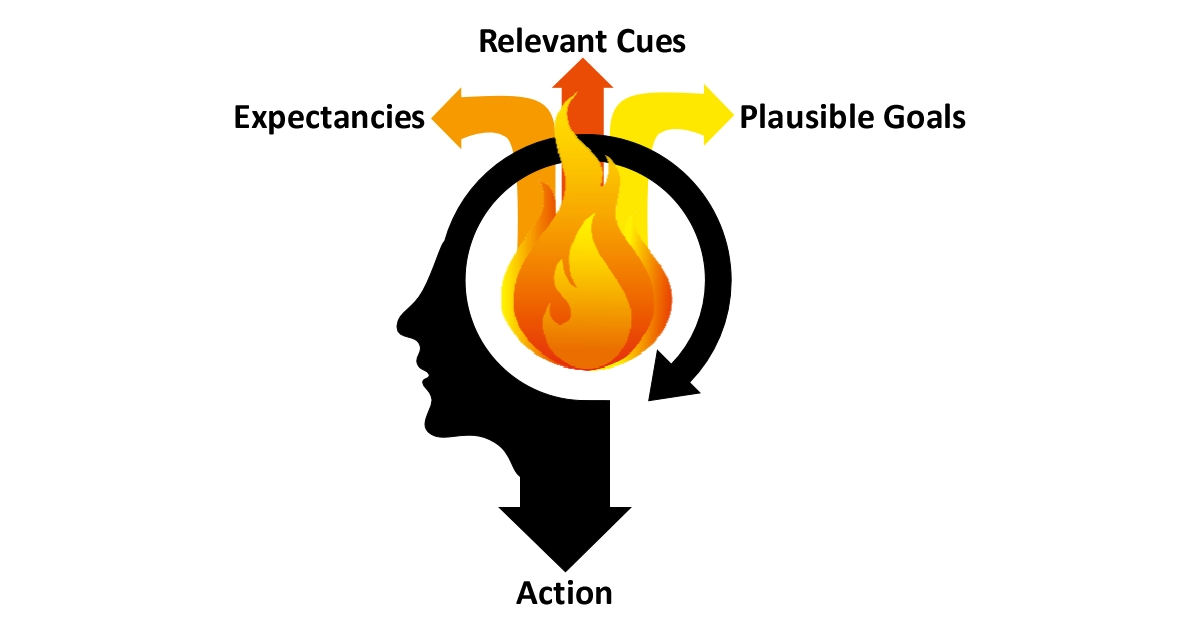
This work is grounded in macrocognition and the broader field of naturalistic decision making, and draws on ongoing engagement with the Naturalistic Decision Making Association.
Key frameworks include:
- Recognition-Primed Decision Model
- Data/Frame Theory of Sensemaking
These frameworks describe how experienced decision makers:
- Recognize patterns based on prior experience
- Form and update mental models (frames)
- Use expectations to guide perception and action
This perspective aligns with operational decision making on the fireground, where rapid assessment and action are required.
Research Approach
The research uses qualitative methods drawn from Cognitive Task Analysis (CTA) to examine decision making in real-world contexts.
Methods include:
- Structured and semi-structured interviews
- Scenario-based elicitation
- Stimulated recall using incident audio and other cues
Interview techniques draw from:
- The Critical Decision Method (CDM)
- Self-Confrontation Micro-Phenomenological Interview (SCMPI)
These approaches move beyond surface-level descriptions and examine the underlying cognitive processes involved in decision making.
Analysis
Analysis follows an abductive approach.
Initial coding draws on existing theory, including Recognition-Primed Decision Making and Data/Frame Theory. It is then combined with inductive coding to identify patterns, relationships, and insights that extend beyond existing frameworks.
This approach supports:
- Identification of decision-making patterns
- Examination of how expectations are formed and adjusted
- Exploration of factors that influence effective or ineffective decisions
Application to Training
The research directly informs the development of fireground decision making training.
Findings inform:
- Tactical Decision Games (TDGs)
- Scenario-based simulations
- Courses and presentations
As a result, training reflects how decisions are actually made on the fireground rather than relying solely on procedural models.
Why It Matters
Improving fireground decision making has direct operational impact.
Better understanding of decision processes can:
- Improve size-up and initial actions
- Support more effective command decisions
- Reduce risk to firefighters and civilians
This work bridges the gap between research and practice by translating insights into practical training.
Ongoing Work
This research is ongoing and continues to evolve.
Future work will expand:
- Understanding of pre-arrival cognition
- The role of expectation in decision making
- Application of research findings to training design