Making Decisions Under Uncertainty
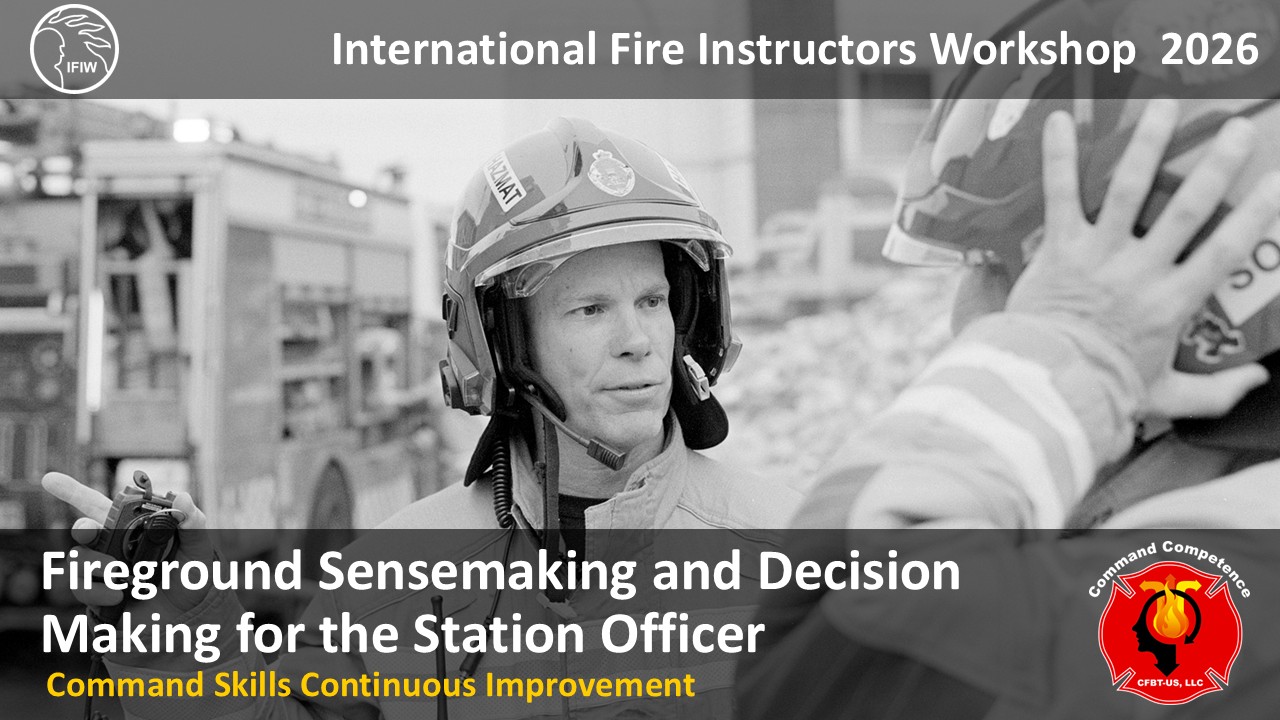
Fireground sensemaking and decision making are critical skills for station officers operating under time pressure, uncertainty, and risk. The first-arriving station officer faces uncertainty from the moment of dispatch. Conditions change quickly, information is incomplete, and time is limited. Before formal command functions are established, the officer must make sense of what is happening and decide how to act. These early judgments shape strategy, risk posture, and incident tempo.
This presentation focuses on how station officers make sense of structure fires during response and immediately after arrival. It examines how pre-arrival anticipation and early framing influence initial fireground decisions. Rather than treating decision making as a comparison of multiple options, the session draws on naturalistic decision making research to explain how experienced officers actually think under pressure.
Experience, Expertise, and Sensemaking
Experience alone does not guarantee effective decision making. Expertise develops when officers learn to recognize meaningful patterns, identify critical cues, and adapt actions to changing conditions. Sensemaking plays a central role in this process. Officers construct meaning from limited, ambiguous, and dynamic information while answering two core questions: What is going on? and What should I do next?
Working-memory limits make exhaustive analysis impossible on the fireground. Officers cannot consciously evaluate every potential factor. Instead, they rely on recognition and framing to narrow attention to what matters most in the moment.
Fireground Sensemaking and Decision Making in Practice
Naturalistic decision making research helps explain how expert officers function in real incidents. Experienced officers often recognize situations as familiar, identify plausible goals, and mentally simulate actions before committing resources. This process allows rapid action while still supporting adaptation when conditions change.
Research-Informed Observations
The presentation also introduces preliminary observations from an ongoing qualitative study of station officers’ pre-arrival thinking. Early interviews suggest that officers often form an initial frame based on a small number of cues. That frame can support rapid action, but it may require revision when new information emerges. Recognizing anomalies and reframing early appear to be critical skills.
Implications for Training
This session at the 2026 International Fire Instructors Workshop (sponsored by the Institution of Fire Engineers-Australia Branch) examines fireground sensemaking decision making during the earliest stages of structure fire response. It highlights practical implications for officer development, including the use of scenario-based training and Tactical Decision Games to strengthen anticipation, sensemaking, and adaptive expertise during the first critical minutes of an incident.