Commercial Fire TDG
This commercial fire tactical decision game places company officers at a nighttime laundromat fire in inner-suburban Sydney. You are the first-arriving engine officer dispatched at 20:55 with reports of visible flames. Travel time is short, so early decisions must occur while enroute. This scenario emphasizes rapid size-up, crew briefing, and recognition-primed action under time pressure.
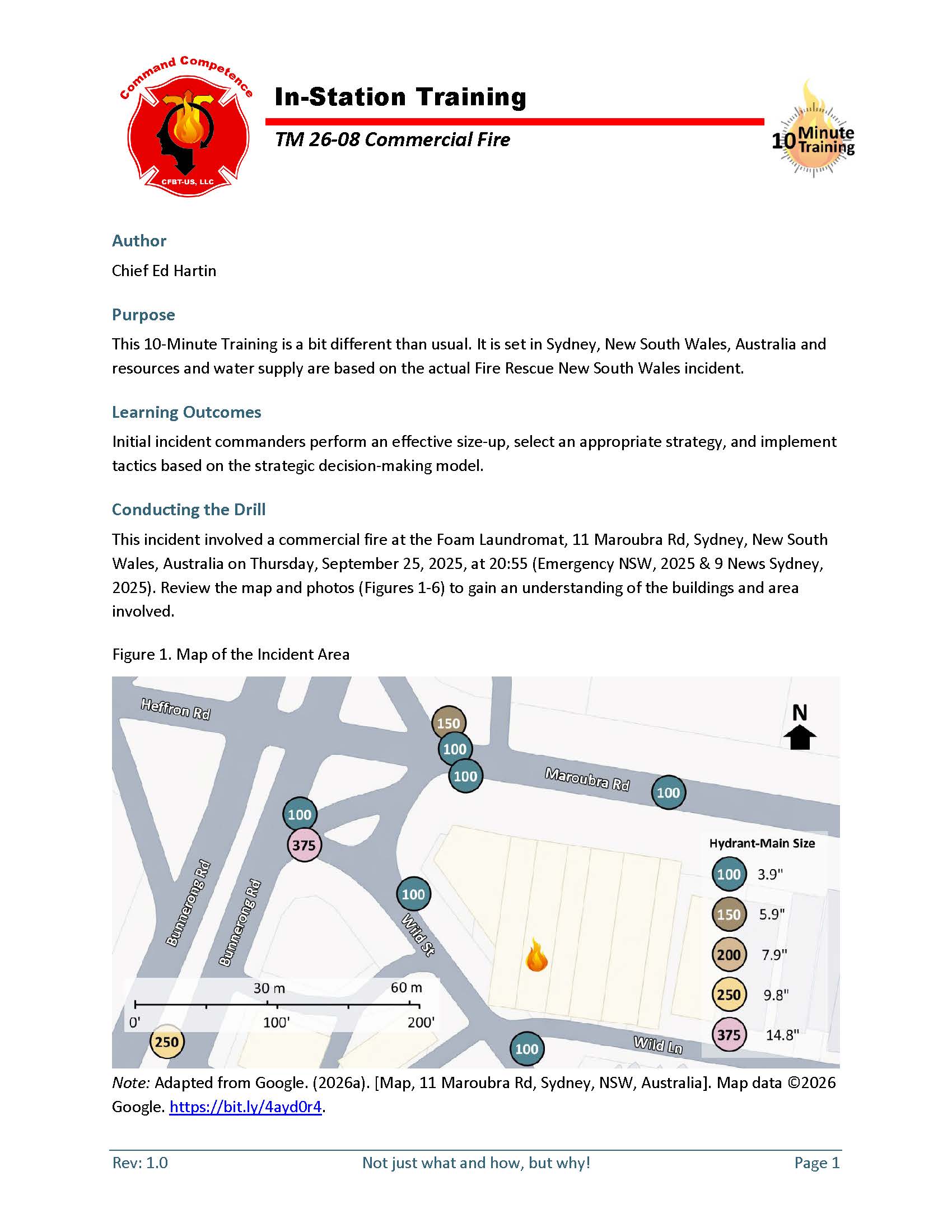
You respond to a commercial occupancy in a mixed residential area with older construction and limited staffing. Fire Rescue New South Wales engines carry 2,000 L of water and arrive with four personnel. Hydrants exist but require a riser to access below-grade connections. Initial strategic choices must consider water supply, exposure risk, and delayed reinforcement. Critical considerations include:
- Visible fire in a commercial laundromat
- Two-engine initial response with staggered arrival
- Below-grade hydrants requiring setup time
- Adjacent occupancies with potential extension
- Limited staffing until additional alarms arrive
Incident Video
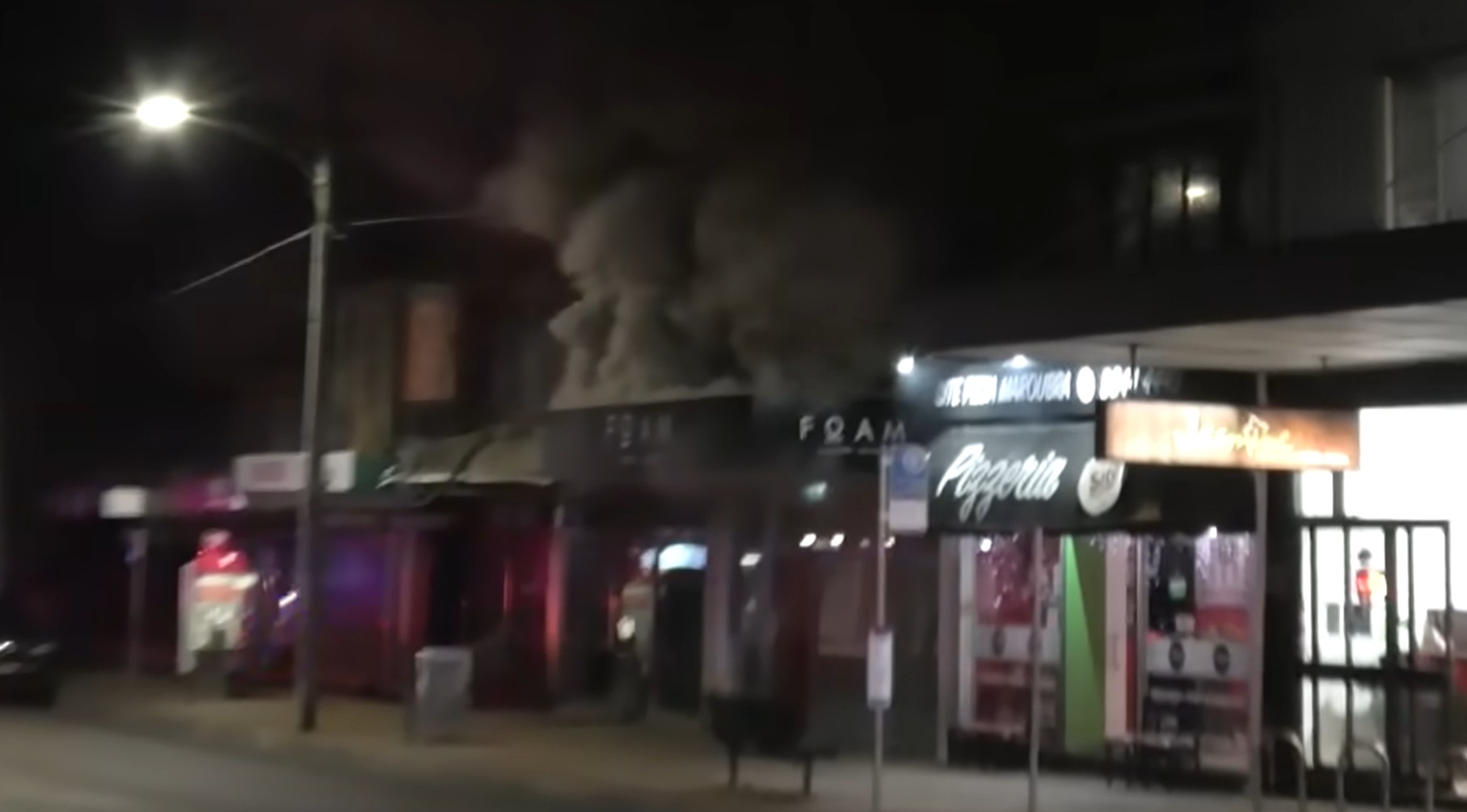
The training includes real incident video (Emergency NSW, 2025) showing conditions shortly after arrival and early operations. The footage begins on Side Charlie before transitioning to Side Alpha, providing valuable context for size-up and strategy evaluation. Use the video to compare your initial action plan with actual operations. Pay close attention to fire intensity, building involvement, and exposure threats.
Important Lessons
This commercial fire tactical decision game highlights how initial strategy shapes the entire incident. First-arriving officers must rapidly balance life safety, fire control, and resource limitations. The actual incident commander implemented a defensive strategy, illustrating how construction type, fire volume, and staffing influence decisions. The PDF also includes an additional learning section discussing deployment models and staffing standards across jurisdictions.
Company officers should focus on communication, task assignment, and continuous reassessment as conditions evolve. Recognition-primed decision making allows officers to act quickly based on experience and cues rather than formal analysis. Effective command presence, clear radio reports, and anticipation of incoming resources are essential for maintaining control during the first critical minutes.
Learn more about how to use 10-Minute Training and find additional tactical decision games in the 10-Minute Training Library.