Vegetation Fire Tactical Decision Game
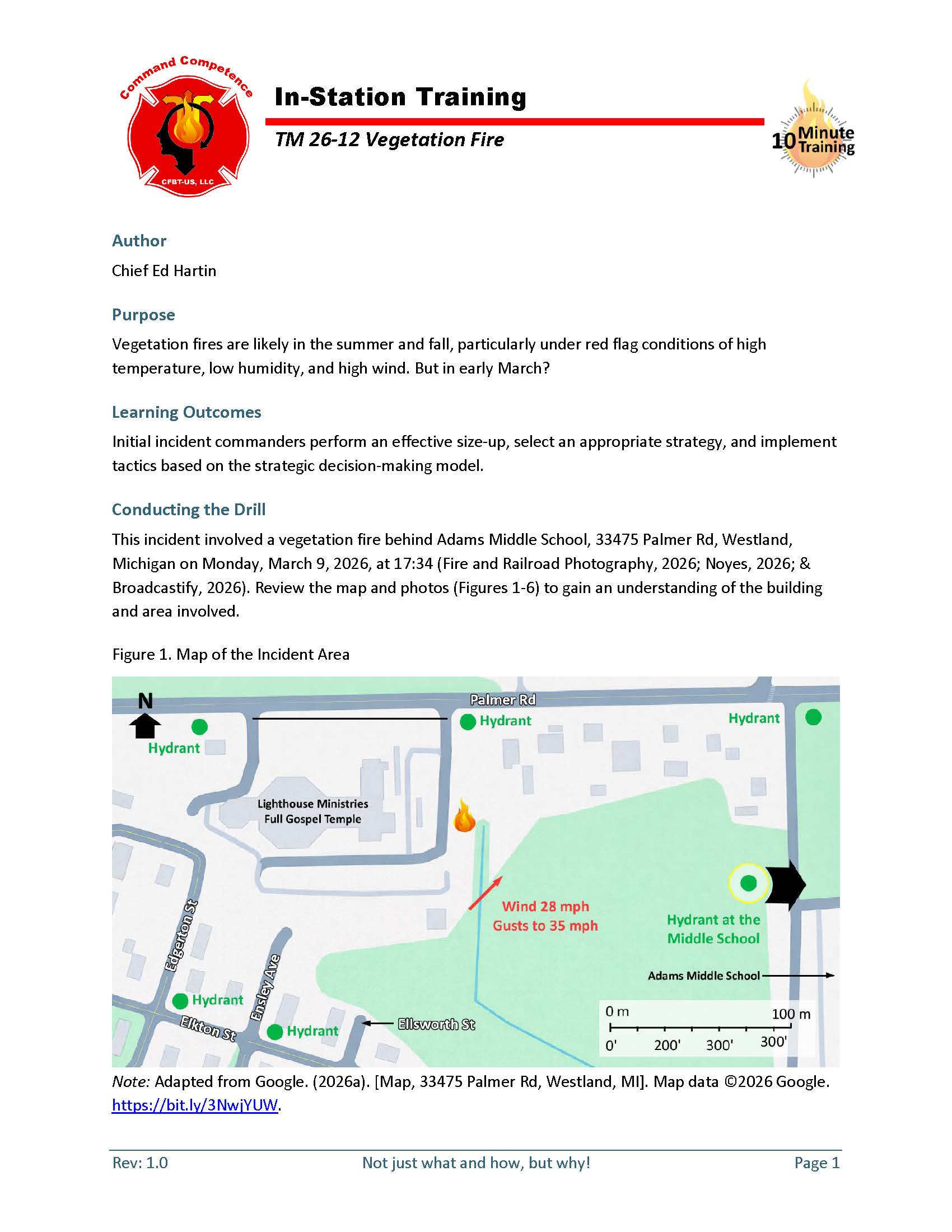
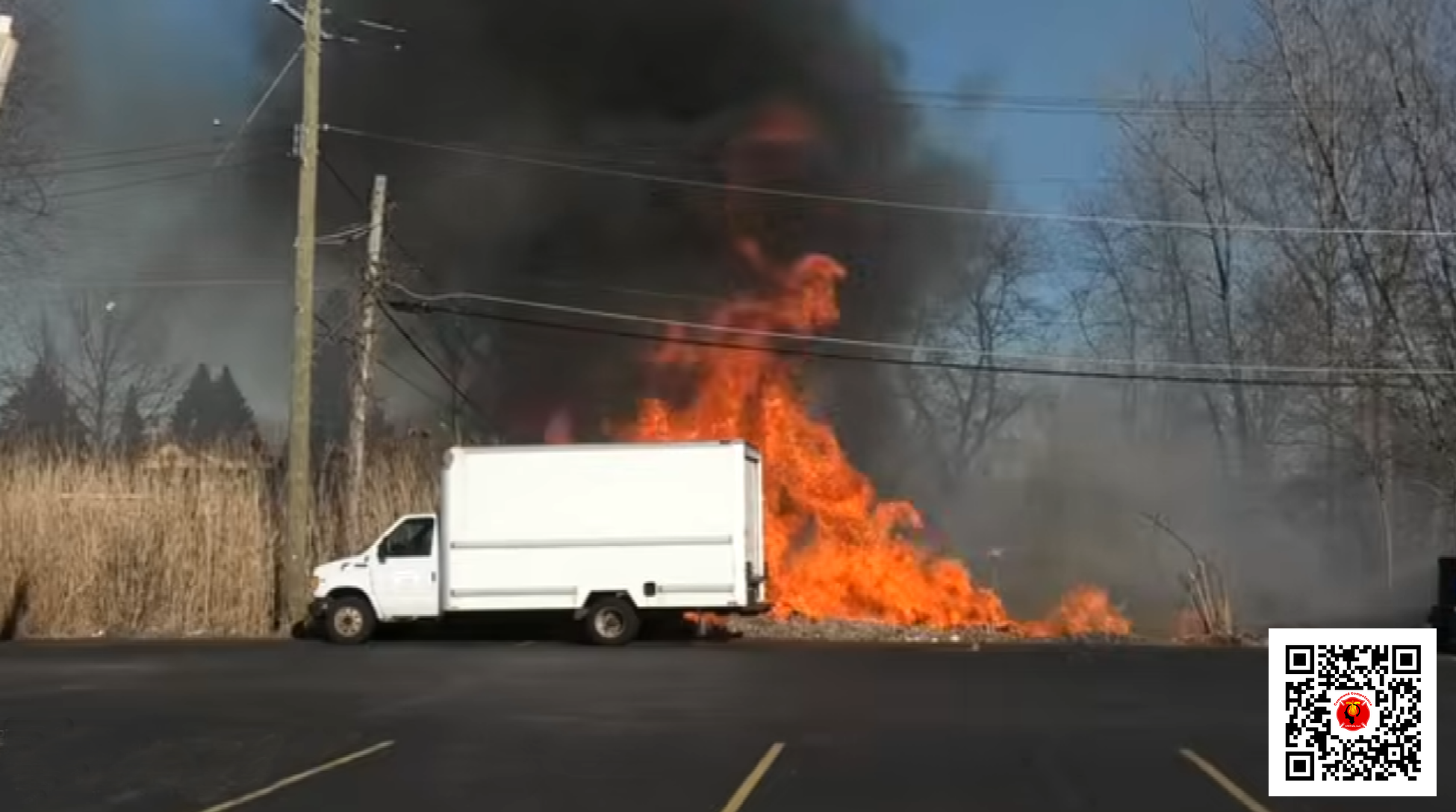
This vegetation fire tactical decision game (TDG) places you in the role of a company officer responding to a reported brush fire in a suburban area of Westland, Michigan. Initially, dispatch initially reports a small fire behind Adams Middle School. However, while enroute, a second caller upgrades the report to a larger fire. On arrival, you observe a smoke column pushing across Palmer Road under strong wind conditions. The fire involves grass and vegetation with immediate exposure to fences, stored materials, vehicles, and nearby residential structures.
During initial operations, several key factors influence your size-up, including:
-
Wind-driven fire spread with gusts up to 35 mph
-
Mixed fuels including grass, fences, and stored combustibles
-
Close proximity to residential structures and vehicles
-
Limited initial resources with a single engine assignment
-
Potential for rapid extension to structural exposures
-
Need for immediate line placement and exposure protection
Incident Video
The vegetation fire TDG includes incident video showing conditions on arrival and early fire spread. Specifically, the video captures wind-driven fire behavior and ember movement toward nearby exposures. As conditions develop, fire extends into fencing and combustible materials in the backyard of an adjacent structure. Therefore reviewing the video helps officers recognize key cues such as rate of spread, exposure risk, and the effectiveness of initial hoseline placement.
Important Lessons
Importantly, vegetation fires in suburban areas can quickly transition into structure threats under wind-driven conditions. In this incident, embers and direct flame contact created immediate exposure problems. Therefore, command decisions must prioritize confinement, exposure protection, and water application in the most effective locations. This vegetation fire tactical decision game emphasizes recognition-primed decision making under rapidly changing conditions. Officers must interpret cues, anticipate fire spread, and adjust tactics quickly. This vegetation fire TDG includes an additional learning section that encourages crews to complete the the Underwriters Laboratories Fire Safety Research Institute (UL FSRI) Structure Triage Considerations for Wildland Urban Interface Firefighting and evaluate vegetation-to-structure fire risk, review equipment capabilities, and conduct area familiarization.
Effective operations require balancing speed and control. Early hoseline placement, clear communication, and anticipating resource needs are critical. Consider that even small vegetation fires can escalate rapidly when wind, fuel, and exposure align. Officers must continuously reassess conditions and adjust strategy to maintain control and protect structures.
Learn more about how to use 10-Minute Training and find additional tactical decision games in the 10-Minute Training Library.