High-Rise Fire Tactical Decision Game
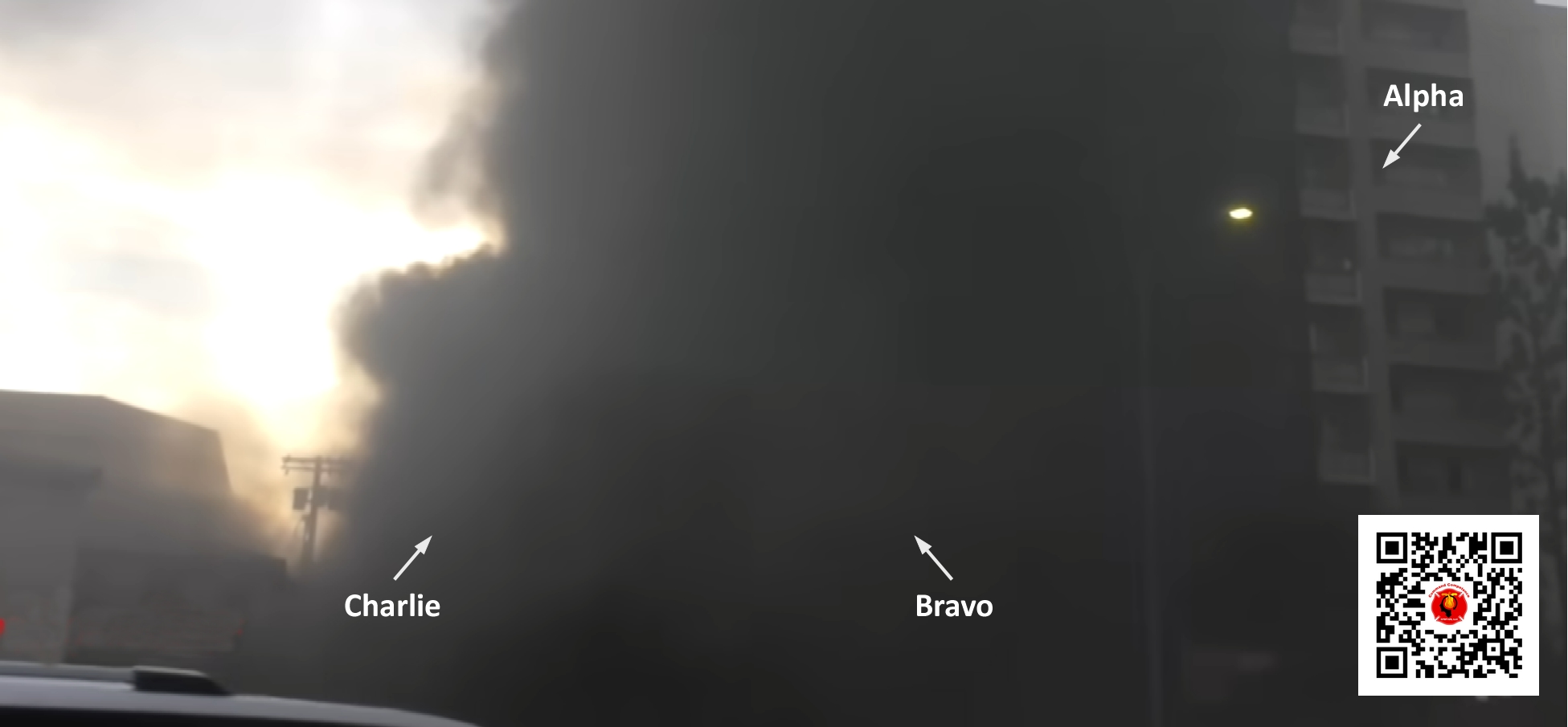
This high-rise fire tactical decision game (TDG) is designed for IC #1 / company officers arriving first at a residential high-rise with smoke showing from the building. The incident involves a 13-story condominium undergoing exterior renovation. You arrive with limited information, visible smoke, access challenges, and an early report that fire is showing on Floor 2 above the parking garage.
You must decide how to size up the incident, position your company, communicate your initial radio report, and assign your crew before a command officer arrives. The first-arriving officer’s actions shape the tempo, risk profile, and initial incident action plan.
Early decisions matter because the first company must balance investigation, fire control, occupant life safety, crew safety, water supply, and access. In a high-rise fire, small delays or unclear assignments can quickly affect the entire first alarm.
Decision Focus
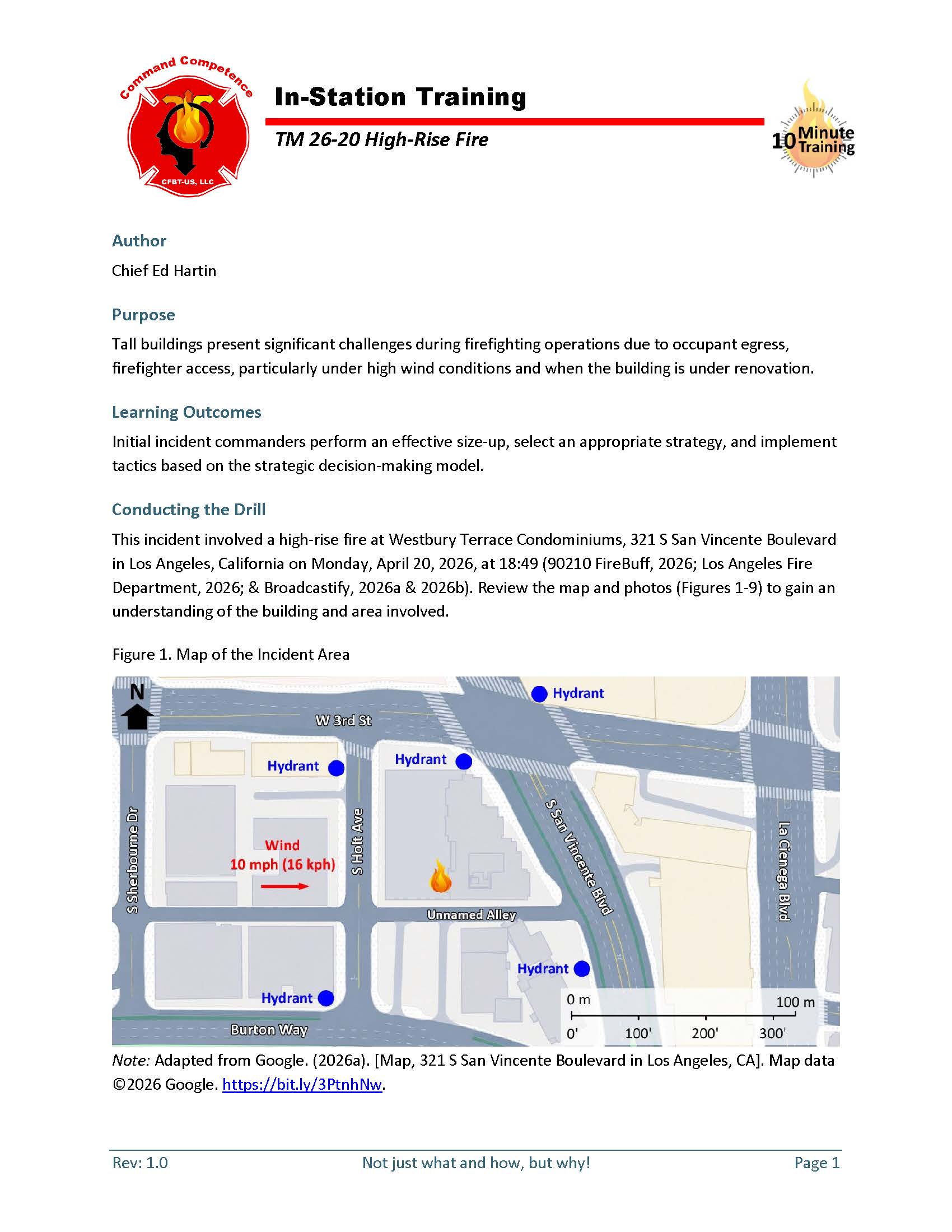
The core decision problem is how IC #1 should match strategy and tactics to incomplete information. Smoke is visible from Side Alpha, but the first-arriving officer does not yet have a complete view of Side Charlie or the fire’s exact location.
This drill asks company officers to practice pre-arrival thinking, initial communications, crew assignment, follow-up reporting, and command transfer. It also requires them to adjust when Engine 2 reports fire showing on Floor 2 above the parking garage.
Incident Video and Audio
The incident video shows conditions on arrival and later Side Charlie operations. Watch the video, pause when prompted, and decide what you would do as IC #1.
The incident audio provides critical information about conditions on Side Charlie during the early stages of the incident.
Important Lessons
This high-rise fire TDG reinforces the importance of matching early tactical action to building layout, access, fire location, wind, and available resources. Company officers must form expectations during response, test those expectations on arrival, and reframe quickly when new information arrives.
Key lessons include recognizing access limitations, communicating clear radio reports, assigning crews based on priority and risk, and preparing for command transfer. The Additional Learning segment extends the drill by using incident video (including radio communications) to examine multiple lessons from this incident.
What Does Good Look Like
Effective IC #1 performance includes a clear initial size-up, recognition of critical cues, and a tactical plan that fits the conditions. The company officer communicates what they see, what they are doing, and what they need. They assign their crew with purpose, monitor changing information, and adjust when the second-arriving company reports fire from another side of the building.
Good performance does not require perfect information. It requires disciplined thinking, clear communication, and realistic adaptation under time pressure.
Learn more about how to use 10-Minute Training and find additional tactical decision games in the 10-Minute Training Library.