Residential Fire Tactical Decision Game

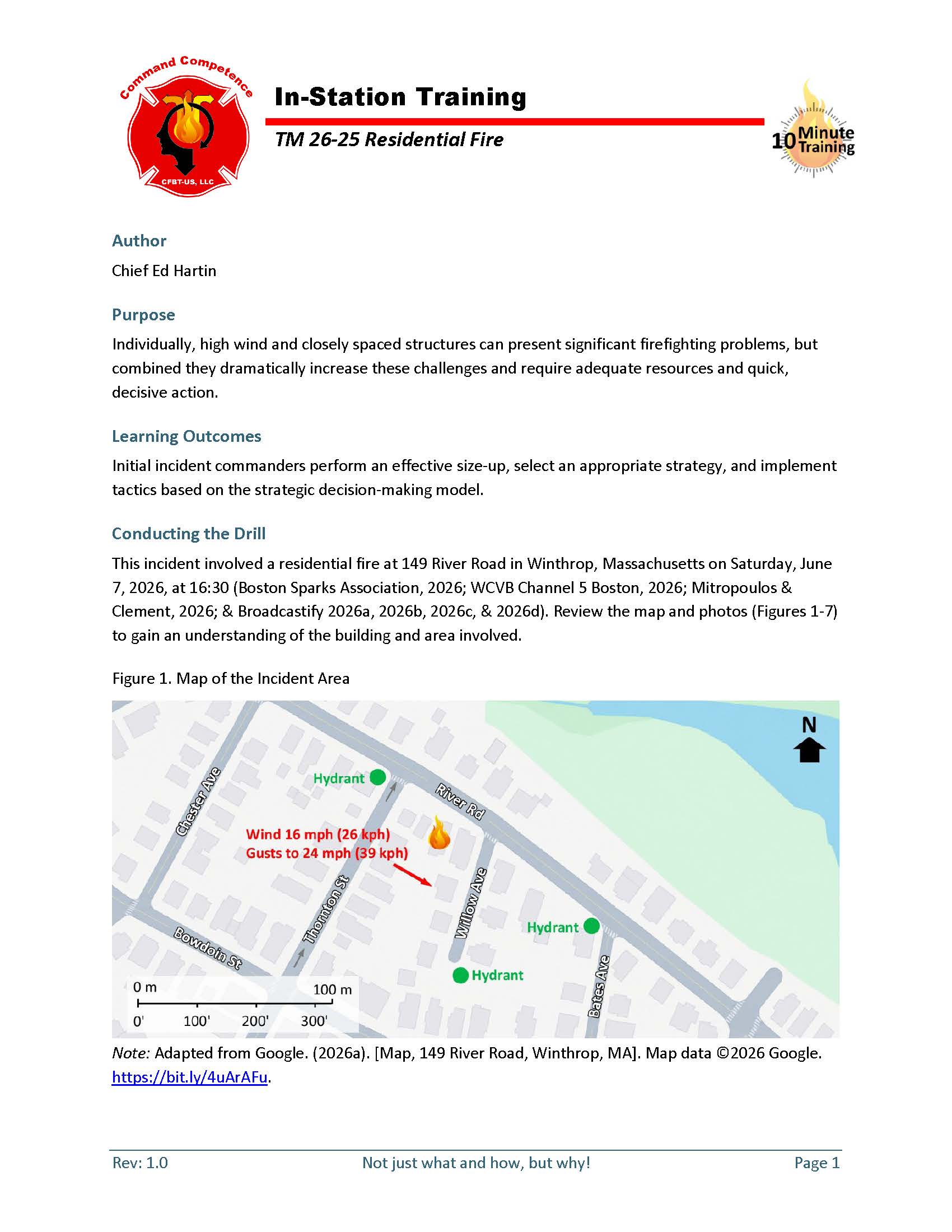
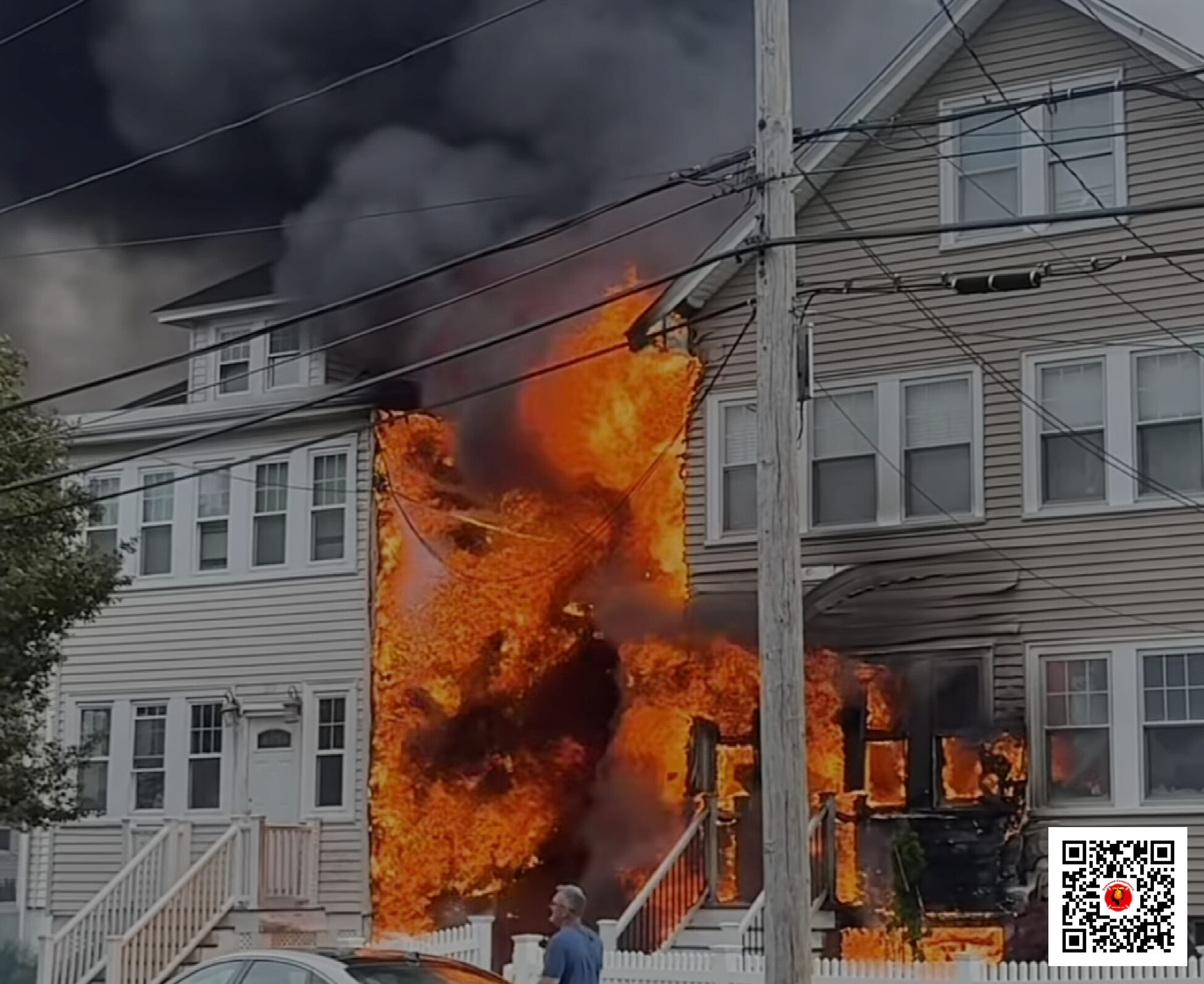
This residential fire tactical decision game (TDG) places IC #1 / company officers at a fast-moving fire in Winthrop, Massachusetts. The incident involves closely spaced homes, reported entrapment, visible smoke from the station, and possible extension to exposures.
However, the first-arriving officer must work with limited initial resources. High-density residential construction and wind can quickly create a larger fire problem. Therefore, early decisions must address rescue, exposure protection, water supply, and fire control.
The first-arriving officer sets the incident tempo. As a result, clear communication, quick resource decisions, and disciplined tactical priorities matter before the full alarm assignment arrives.
Decision Focus
This drill focuses on the first-arriving company officer’s initial strategy. IC #1 must interpret dispatch information, visible smoke, reported entrapment, wind, and exposure risk.
Then, the officer must communicate the initial radio report and assign their crew and the next two companies before transfer of command to a chief officer. The decision problem includes water supply, line selection, fire control, rescue profile, exposure protection, and early escalation.
Incident Video
The incident video shows arrival conditions and early operations at the residential fire. Watch the video, pause when prompted, and decide what you would do as IC #1. The incident video includes a recording of incident radio traffic, but the audio is not synchronized with the action seen in the video.
Important Lessons
This residential fire TDG reinforces how wind and closely spaced buildings can compound the first-arriving officer’s problem. Heavy smoke, reported entrapment, and exposure fire require rapid but disciplined prioritization.
In addition, the drill emphasizes water supply, flow, line selection, and multiple points of application. Limited initial staffing does not remove the need for decisive action. The Additional Learning segment extends the drill through discussion and hands-on practice with single-company and two-company tactical options.
What Does Good Look Like
Effective IC #1 performance starts with a complete size-up and a clear initial report. The officer recognizes exposure risk, confirms the actual address, and requests resources early.
Good performance also requires practical coordination. IC #1 assigns the crew, supports water supply, communicates conditions, and adapts as new information emerges. Then, the officer provides a concise CAN report during command transfer.
Learn more about how to use 10-Minute Training and find additional tactical decision games in the 10-Minute Training Library.