Commercial Fire Tactical Decision Game
This commercial fire tactical decision game places chief officers in the role of IC #2 at a working laundromat fire in Sydney. You respond after multiple companies and a second alarm are already enroute. Reports indicate visible flames from the roof of a one-story commercial building in a row of occupancies. Your task is to conduct ongoing size-up, assume command, and adjust strategy as conditions deteriorate.
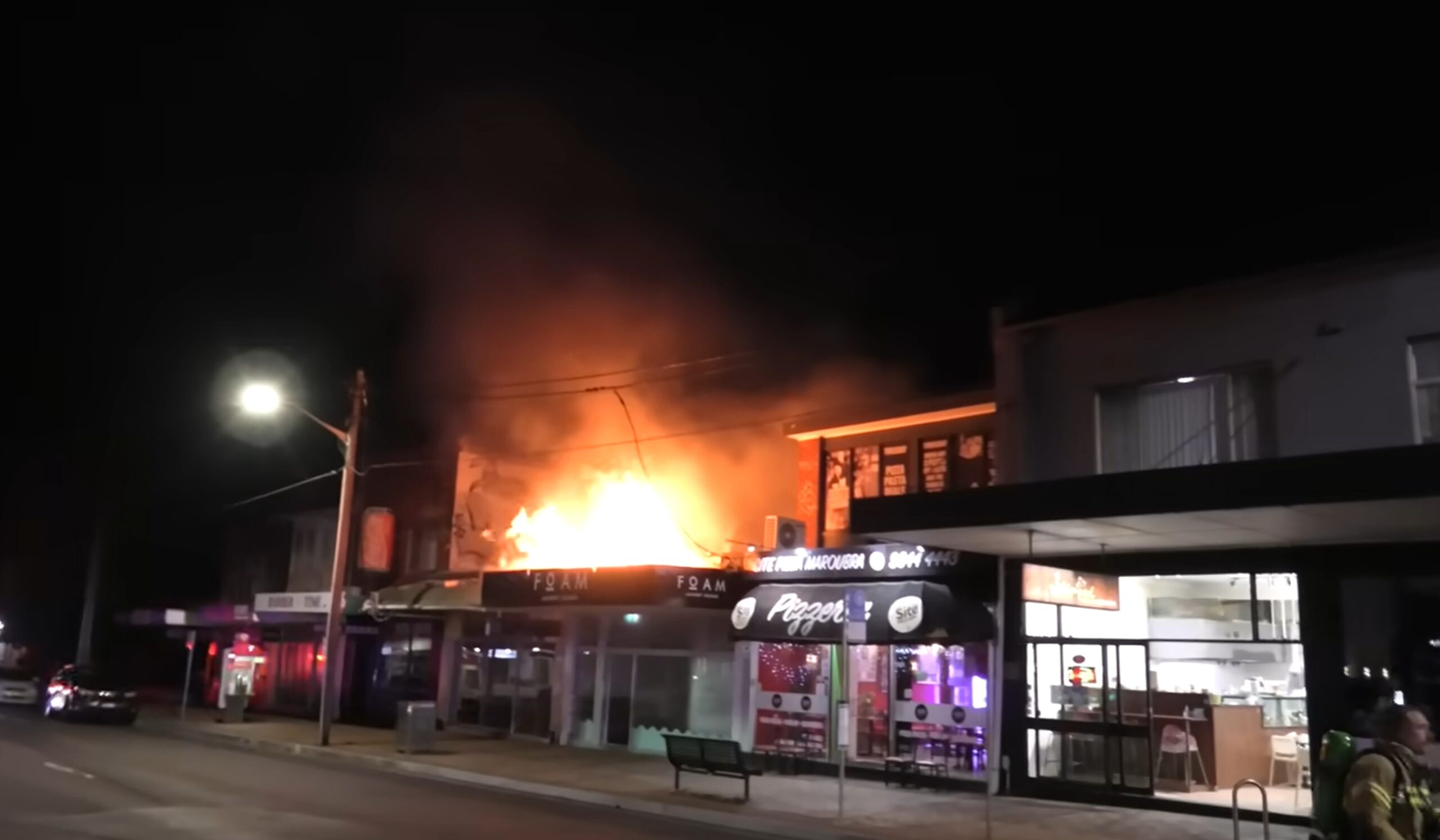
As you respond, you must anticipate command transfer and evaluate operational priorities before arrival. Fire Rescue New South Wales companies operate with limited staffing and tank water. Hydrants are below grade and require risers for access, affecting water supply timing. Key command considerations include:
- Working fire in a middle occupancy of a commercial row
- Offensive operations already underway
- Exposure risk to adjacent occupancies
- Limited initial staffing and water supply
- Need for staging and expanded resource management
Incident Video
The training includes real incident video (Emergency NSW, 2025) showing conditions during your arrival and the transition in strategy. The footage illustrates fire through the roof, limited effectiveness of interior streams, and the need for defensive operations. Use the video to evaluate your command transfer decisions and resource deployment. An additional incident video (Garden, 2025) shows defensive operations later in the incident. Observe how conditions on Sides Alpha and Charlie influence tactical priorities.
Important Lessons
This commercial fire tactical decision game emphasizes the responsibilities of the second-arriving command officer. You must confirm assignments, obtain CAN reports, and determine whether strategy remains appropriate. In this incident, worsening fire conditions required a shift to defensive operations and expansion to a higher alarm. The PDF also includes an additional learning section addressing division organization, span of control, and deployment differences across agencies.
Chief officers should focus on incident organization, supervision of multiple divisions, and protection of exposures. Recognition-primed decision making supports rapid action when cues indicate that current tactics are ineffective. Establishing clear structure, staging discipline, and accountability ensures safe and coordinated operations as resources increase.
Learn more about how to use 10-Minute Training and find additional tactical decision games in the 10-Minute Training Library.