Fire Service Water Application Training
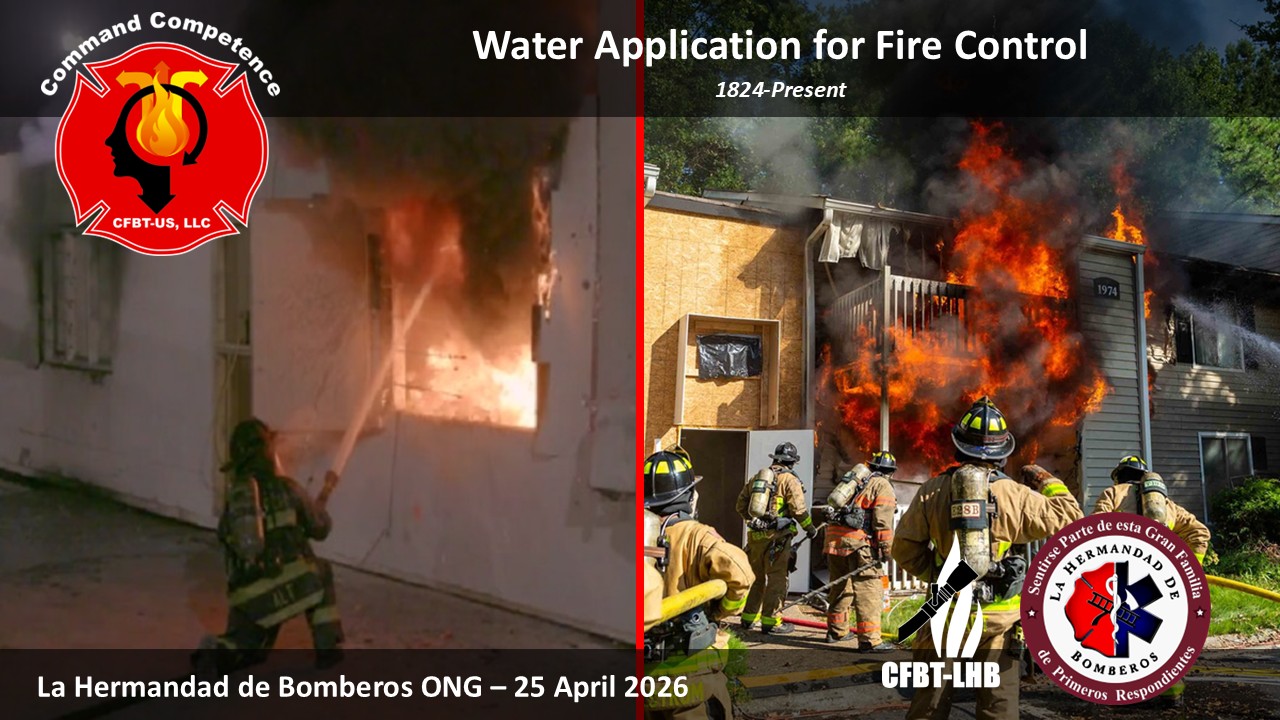
This presentation examines water application for fire control. It explains how firefighters apply water effectively based on where, what, and how considerations. The presentation connects fire dynamics, water behavior, and tactical application. These principles matter because improper water application delays control and increases risk. Conversely, effective application improves fire control, safety, and outcomes on the fireground.
Key Topics
- Water application principles (where, what, and how)
- Fire stream selection and nozzle application
- Gas cooling and surface cooling
- Water mapping and distribution
- Flow rate, pressure, and application rate
- Coordination with ventilation
Presentation Overview
This in-person training presentation provides a structured approach to water application for fire control. The PDF includes the slides used during delivery for review and reinforcement. The presentation integrates historical doctrine from Braidwood, Shaw, and Layman with modern fire science including research conducted by Underwriters Laboratories Fire Safety Research Institute (UL FSRI). It connects these concepts to current operational practice. It also highlights how tactics evolved from direct attack to coordinated application and gas cooling. This progression reinforces the need to understand both theory and application.
Important Lessons
This fire service water application training teaches firefighters to recognize fire behavior and critical conditions. It also reinforces coordination of tactics, water application, and ventilation. It also supports anticipation of fire development and decision-making under time pressure.
What Does Good Look Like?
Effective fire control depends on placing the right amount of water in the right place at the right time.
Good performance reflects correct water placement on the hot gases and surfaces as well as burning fuel. It includes appropriate flow rate and application method for the conditions. It requires coordinated fire attack with ventilation. It balances effectiveness in extinguishment with efficiency in water use and time. These actions reflect strong recognition-primed decision making under dynamic conditions. This presentation is part of the Command Competence training system.
Learn more about training, presentations, and tactical decision games at the Command Competence Resource Library.