Nitric Acid Tactical Decision Game

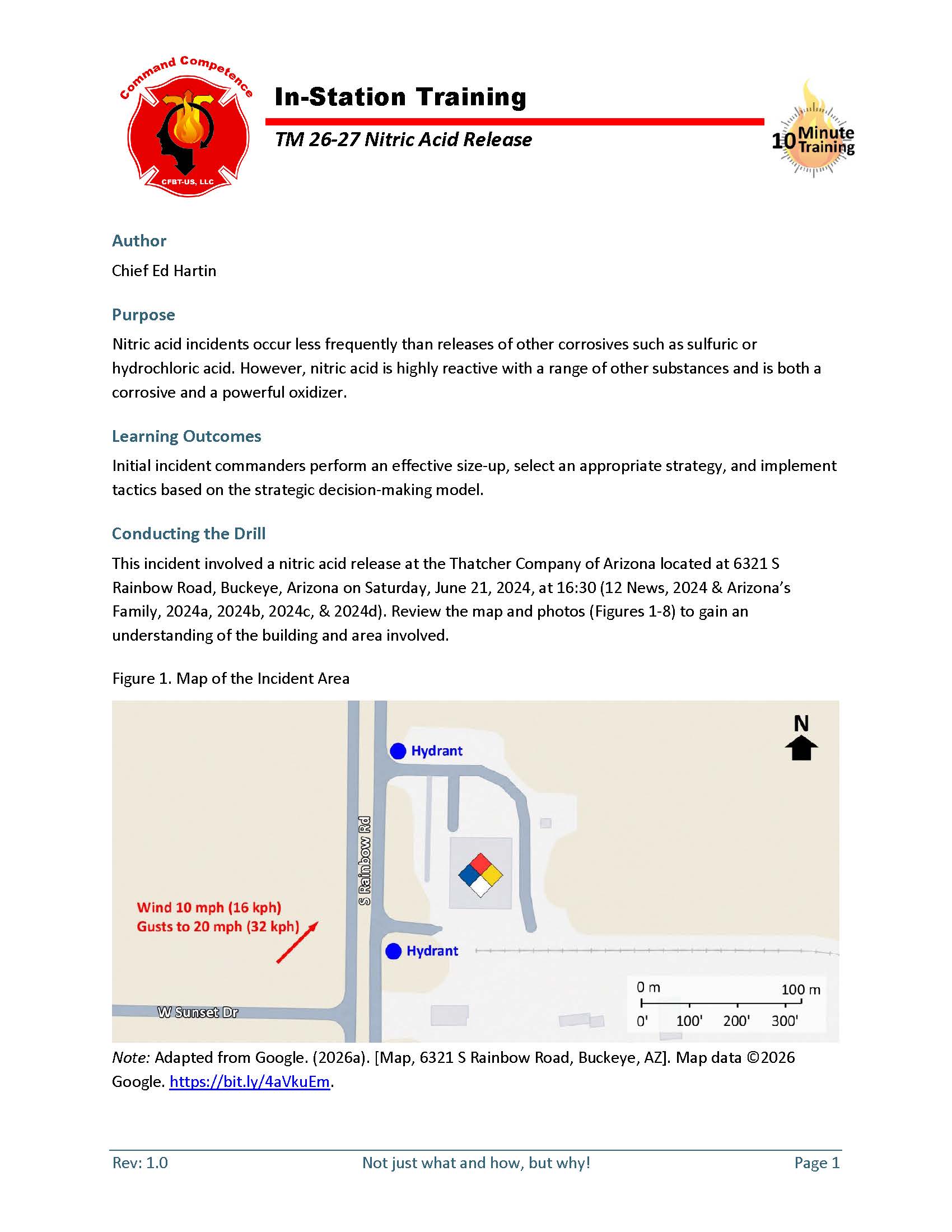
This nitric acid tactical decision game (TDG) places company officers in the role of IC #1 at a hazardous materials incident involving a release of nitric acid at an industrial facility. The first-arriving company must interpret dispatch information, visible conditions, product hazards, wind, access, exposures, and limited initial resources.
However, the first view may not reveal the whole problem. Nitric acid presents corrosive, toxic, and oxidizing hazards. Therefore, early decisions must isolate the area, deny entry, and establish control zones before companies commit into the hazard area.

The first-arriving officer’s decisions set the pace for incident operations. As a result, isolation, uphill and upwind positioning, clear communications, and disciplined command transfer matter before technician level resources arrive.
Decision Focus
This nitric acid tactical decision game focuses on the first-arriving company officer’s initial hazmat strategy and tactics. IC #1 must identify critical factors, assess risks, and establish an incident action plan for initial operations.
Then, the officer must communicate the initial radio report and assign their crew and incoming companies. The decision problem includes isolation, evacuation or sheltering, approach direction, reconnaissance, identifying the initial isolation area and protective action distances, resource determination, and transfer of command. Because information remains incomplete, IC #1 must update the plan as new cues emerge.
Incident Simulation Video
The incident simulation video presents changing conditions during the initial response. Watch the video, pause when prompted, and decide what you would do as IC #1.
The simulation includes a branched decision point. Participants choose whether to maintain command position on Side Alpha or perform upwind reconnaissance before the command officer arrives. Each choice links to a short follow-up video showing how that decision changes the command transfer conditions, actions, and needs (CAN) report.
Important Lessons
This nitric acid TDG reinforces that hazmat incidents require disciplined early control. Recognition of product hazards, wind direction, vapor movement, and access points shapes the initial strategy and tactics.
In addition, the drill emphasizes command discipline before transfer to a chief officer. A command officer taking command without a structured transfer process can result in missing critical information. The additional learning segment examines use of hazmat reference material and the importance of critical thinking when using the DOT Emergency Response Guidebook, NIOSH Pocket Guide to Chemical Hazards, and CAMEO Chemicals.
What Does Good Look Like
Effective IC #1 performance starts with safe positioning and a clear initial report. The officer identifies the likely hazard area, denies entry, performs or assigns reconnaissance when appropriate, and changes the resource determination when conditions warrant.
Good performance also requires restraint. IC #1 protects crews and civilians, communicates uncertainty, and prepares a concise CAN report before command transfer.
Learn more about how to use 10-Minute Training and find additional tactical decision games in the 10-Minute Training Library.