Residential Fire Tactical Decision Game
This residential fire tactical decision game (TDG) is designed for IC #1 / company officers arriving first at a single-family dwelling fire. You are diverted from another alarm and expect a longer response time than normal. The primary uncertainty is whether exterior fire has extended into the attic before you arrive.
On arrival, conditions involve fire on the exterior of the house with potential extension into structural voids. Your first decisions must balance size-up, water application, crew assignment, communication, and the need to protect searchable space.
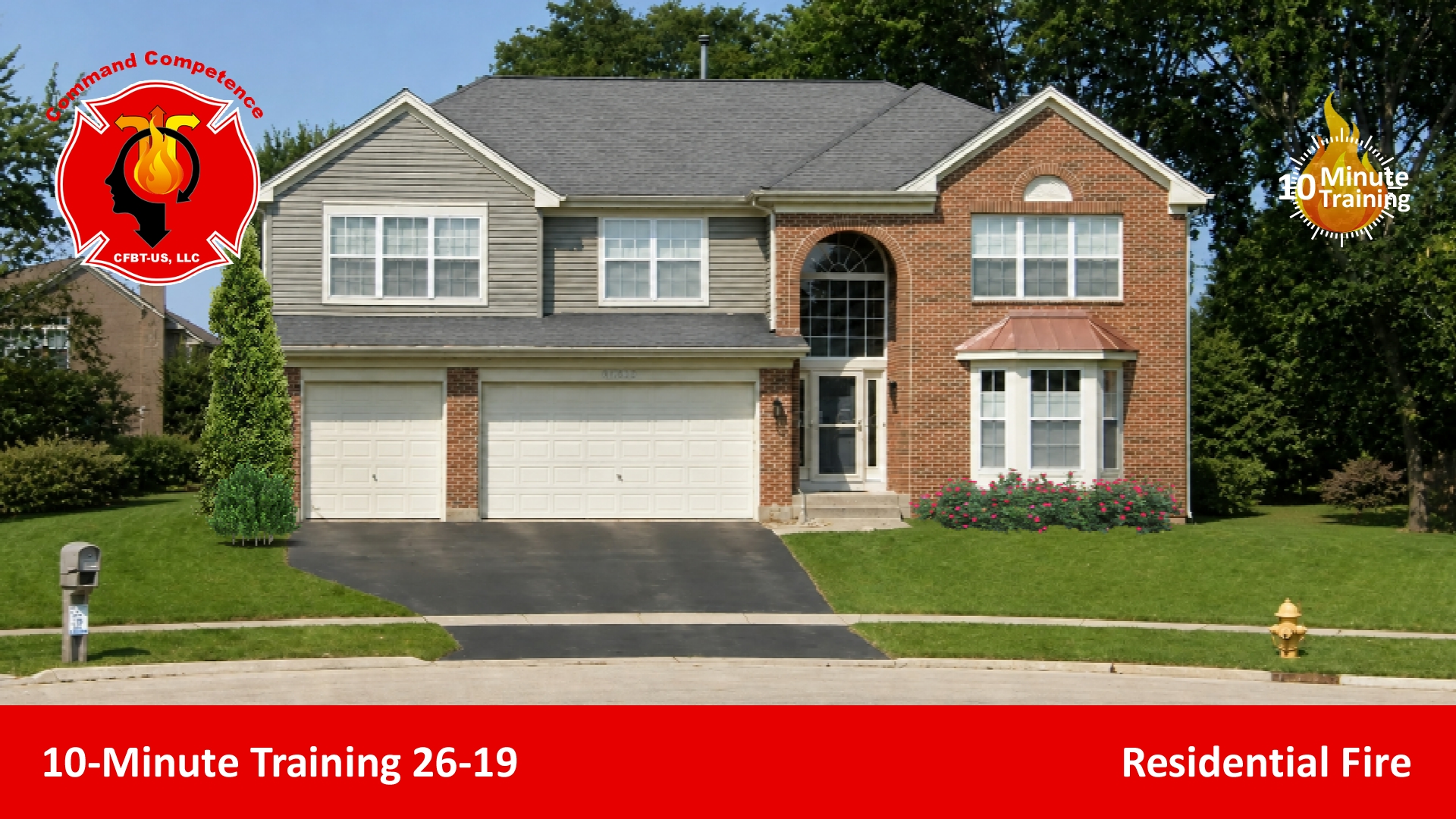
The first-arriving officer’s decisions matter because early recognition of fire location, potential for extension, and water supply can shape the tempo of the first alarm.
Decision Focus
This residential fire TDG asks the company officer to practice how to think and communicate when arrival is delayed and fire conditions may already be changing. The core decision is how to match initial strategy and tactics to a residential fire involving exterior fire spread, attic involvement, and limited early resources.
You must decide what to tell your crew while responding, what to report on arrival, where to apply water first, and how to assign the next companies. The problem is not simply “attack the fire.” The problem is recognizing where the fire is going, what is immediately controllable, and what must be communicated before command transfers to IC #2.
Incident Simulation Video
This incident simulation video supports 10-Minute Training Residential Fire Tactical Decision Game (TDG) 26-19.
Use the pause-and-answer prompts to make each decision before the scenario continues. Watch the video, pause when prompted, and decide what you would do as IC #1.
The simulation builds realistic practice in pre-arrival thinking, initial radio reporting, task assignment, follow-up reporting, and command transfer.
.
Important Lessons
This residential fire TDG reinforces how exterior fire can become an attic fire before the first engine arrives. Important lessons include recognizing extension pathways, anticipating water-mapping problems, and assigning crews based on priority and risk.
The drill also highlights how pre-arrival expectations must be tested against arrival conditions. A company officer may need to reframe the problem from an exterior fire to an attic-extension problem. The Additional Learning segment extends the drill by using incident video to examine attic fire control, exterior-to-interior extension, soffit involvement, and effective water application into the eaves.
What Does Good Look Like
Effective IC #1 performance starts with a clear size-up and a concise initial radio report. The company officer identifies critical cues, selects an initial strategy that matches conditions, assigns the crew to the highest-impact tasks, and gives later-arriving companies specific tactical assignments.
Good performance also includes adjustment. When new information shows attic extension or reduced tactical effectiveness, IC #1 communicates conditions, actions, and needs before command transfer.
Learn more about how to use 10-Minute Training and find additional tactical decision games in the 10-Minute Training Library.