Residential Fire Tactical Decision Game
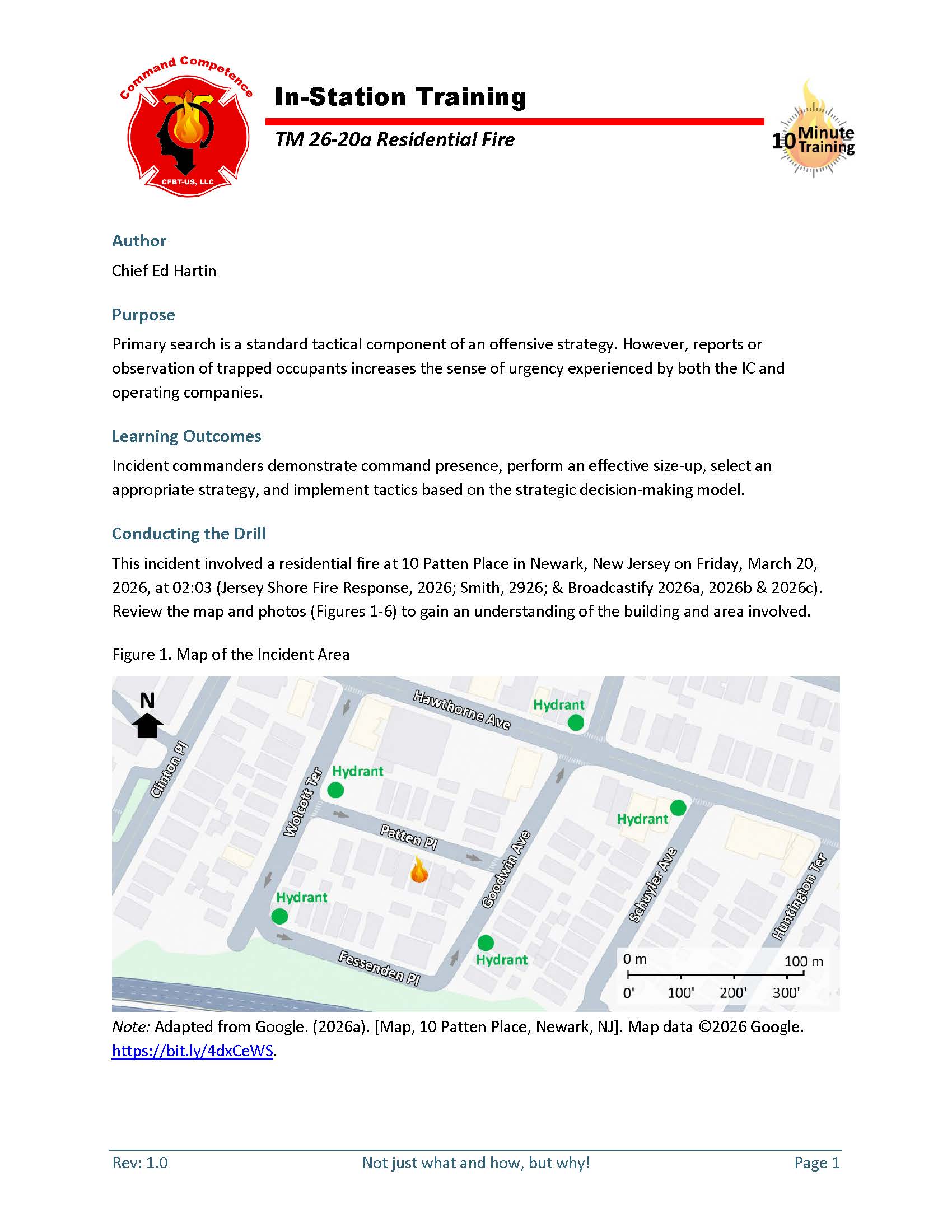
This residential fire tactical decision game challenges IC #2, the chief officer, to assume and organize command after initial operations are underway. This 10-Minute Training TDG places you at 10 Patten Place in Newark, New Jersey. The first-arriving engine reports a working fire on Floor 2, and Ladder 1 is tasked to rescue occupants trapped on the fire escape.
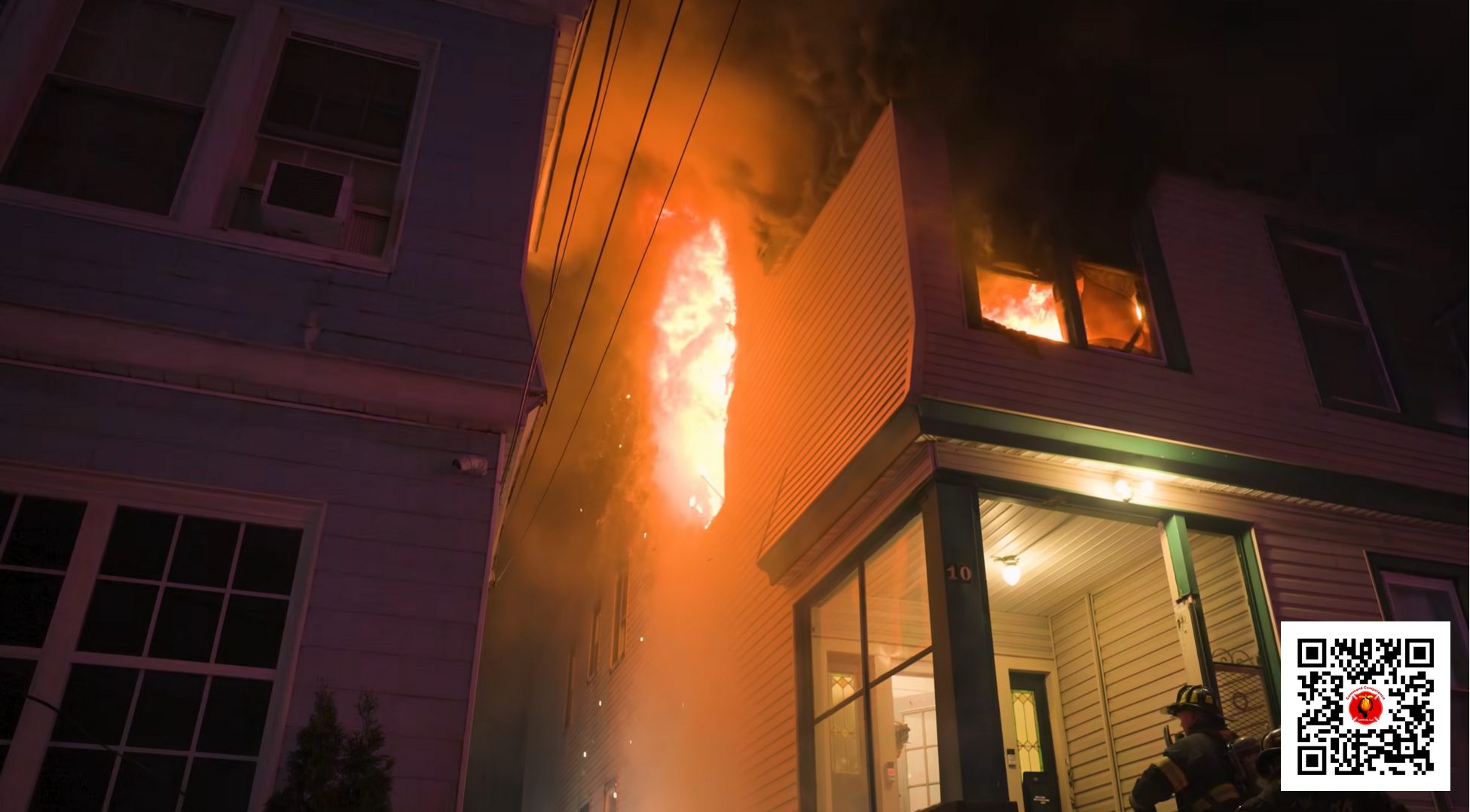
The incident presents a common command problem. IC #1 has acted to address immediate problems, fire control and rescue. You arrive with incomplete information and must determine what is happening, what is working, and continue to develop and implement the incident action plan.
Decision Focus
In this residential fire TDG, IC #2 must complete command transfer, confirm position and function of operating companies, request a CAN report, and transfer command from IC #1. The decision focus includes command presence, prioritizing assignment of arriving companies to address the incident priorities. In addition, IC #2 must develop an effective incident organization to provide tactical supervision and maintain accountability.
Incident Video
The residential fire tactical decision game uses incident video to support realistic decision-making. Watch the assigned video segments, examine the conditions on your arrival, and decide. Communicate your plan of action in the form of task orders to your crew and tactical orders to companies as they arrive.
Important Lessons
Command transfer is more than announcing who has command. It requires confirming the current strategy, company locations, assigned tasks, progress, air status, and unmet needs. In this incident, trapped occupants, fire control, and search priorities compete for attention. IC #2 must also convert initial action into an organized incident. This involves establishing an effective incident organization to provide tactical supervision and aid in maintaining accountability.
In the additional learning section of this training, incident audio and video provide additional context for dispatch traffic, tactical communications, command assignments, and the sequence of operations.
What Does Good Look Like
Good performance includes calm radio communication, a structured command transfer, and tactical assignments that support rescue, fire control, search. IC #2 should quickly build an incident organization that provides tactical supervision and coordination and maintain accountability under changing conditions.
Learn more about how to use 10-Minute Training and find additional tactical decision games in the 10-Minute Training Library.