Residential Fire Tactical Decision Game
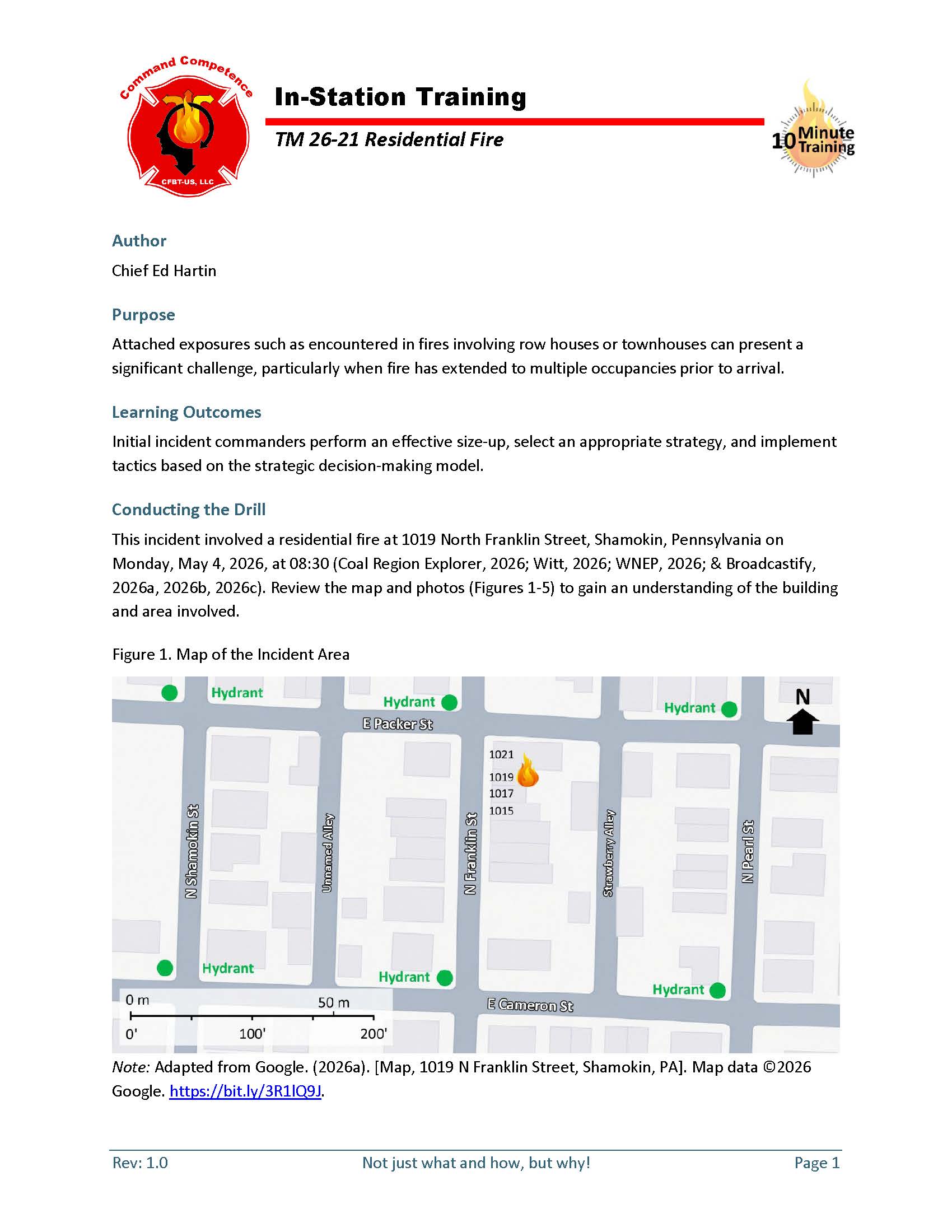
This residential fire tactical decision game challenges IC #1, the company officer, to manage the first operational decisions at an attached rowhouse fire. This 10-Minute Training TDG places you at 1019 North Franklin Street in Shamokin, Pennsylvania. Dispatch reports multiple calls, flames and smoke, and a fire in the middle of an eight-unit row. Law enforcement also reports a burn victim
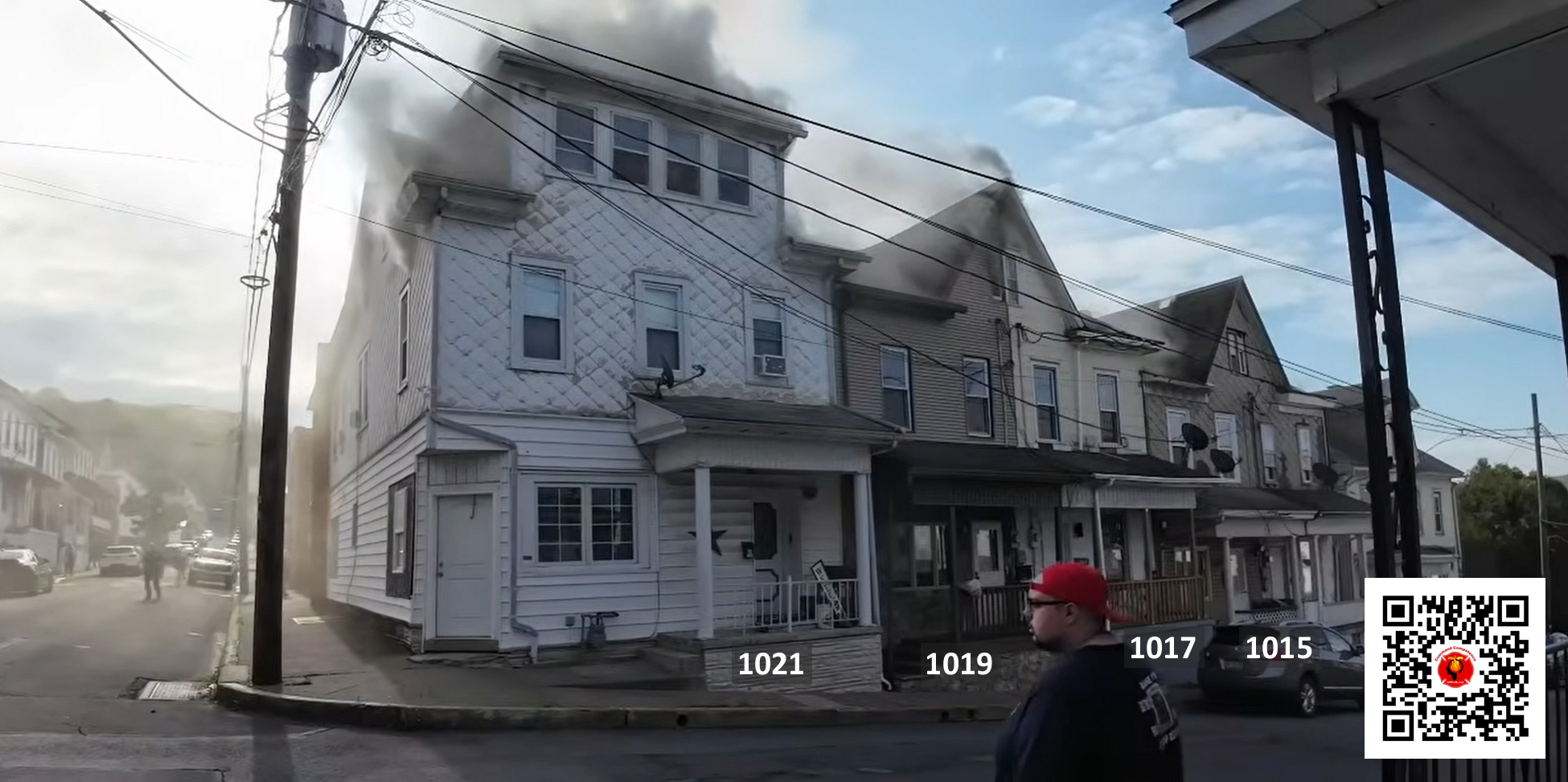
The incident requires fast size-up and disciplined action. You must consider fire location, attached exposures, and limited access to Side Charlie. You must also consider crew capability, water supply, and the arrival sequence of other companies. The first few minutes shape fire control, search, exposure protection, and command transfer.
Decision Focus
In this residential fire TDG IC #1 must decide what to do first, what to assign the crew, and how to communicate conditions clearly. The decision focus includes the initial radio report, task orders, limited reconnaissance, and exposure priorities. It also includes burn-victim information and the CAN report provided during command transfer.
Incident Video
The residential fire tactical decision game uses incident video to support realistic decision-making. Watch the assigned video segments, examine the conditions on your arrival, and decide. Communicate your plan of action in the form of task orders to your crew and tactical orders to companies as they arrive.
Important Lessons
Attached exposures can quickly complicate a residential fire. Early decisions must account for fire location, likely extension, and search priorities. They must also account for how a single crew can best influence the incident. However, the first-arriving officer must avoid overcommitting. The initial plan should account for water, access, and accountability. The burn-victim report adds urgency. However, it does not remove the need to control fire conditions and protect searchable space.
The additional learning segment extends the residential fire TDG by using building photos of the Bravo 1 and Delta 1 Exposures, incident video and audio. Incident video and audio provide additional context for radio traffic, command coordination, and later incident development.
What Does Good Look Like
Good performance includes a clear initial radio report, rapid crew direction, and effective use of limited reconnaissance. It also includes tactical assignments that match observed conditions. IC #1 should communicate what is happening, what actions are underway, and what assignments are needed next.
Learn more about how to use 10-Minute Training and find additional tactical decision games in the 10-Minute Training Library.