Residential Fire Tactical Decision Game

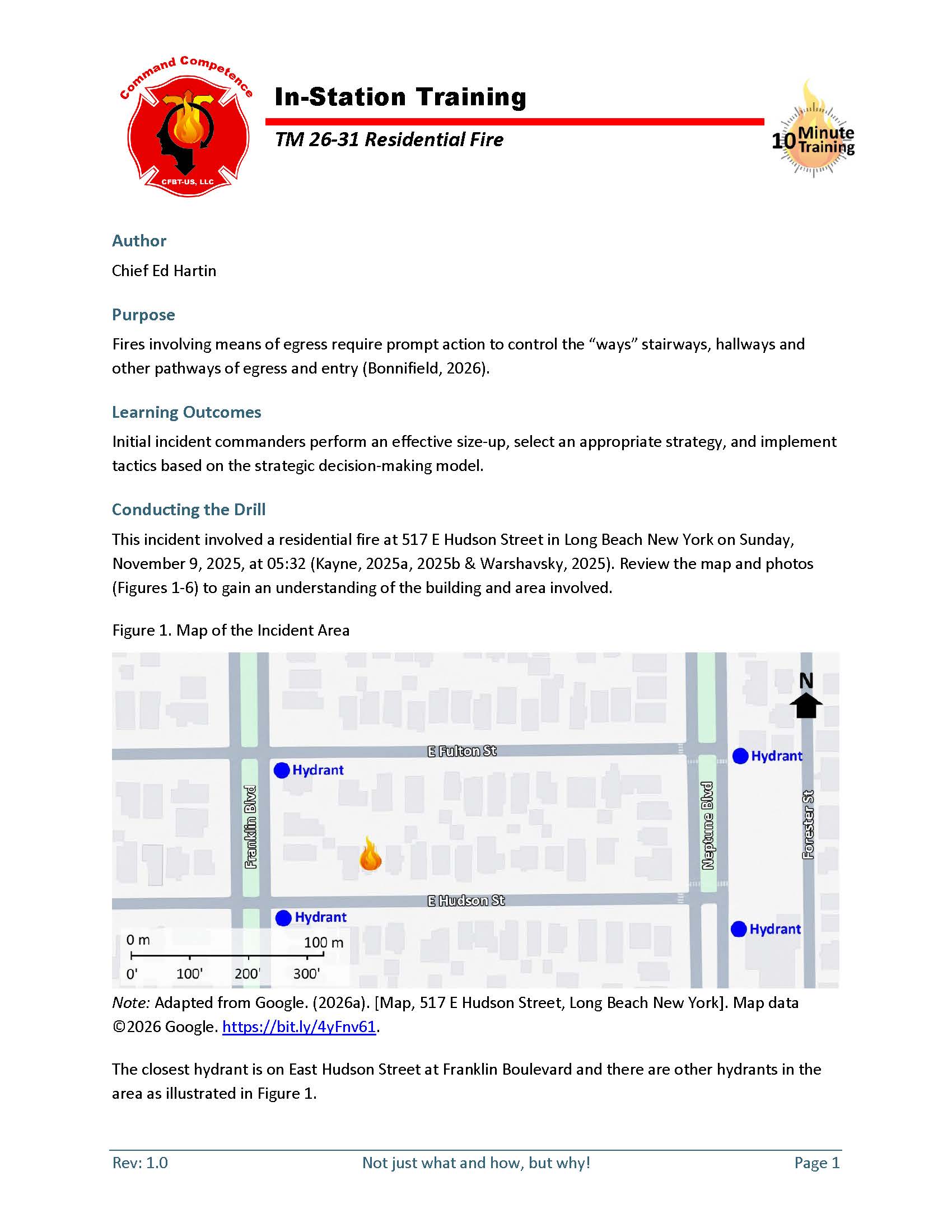
This residential fire tactical decision game (TDG) places company officers in the role of IC #1 at a duplex fire in Long Beach, New York. The incident involves fire near the means of egress, closely spaced homes, reported occupant information, and limited initial resources.
However, the first-arriving officer must avoid focusing only on visible flame. Fire involving stairs, hallways, and exterior access can threaten both egress and entry. Therefore, IC #1 must control the “ways” while matching tactics to conditions.
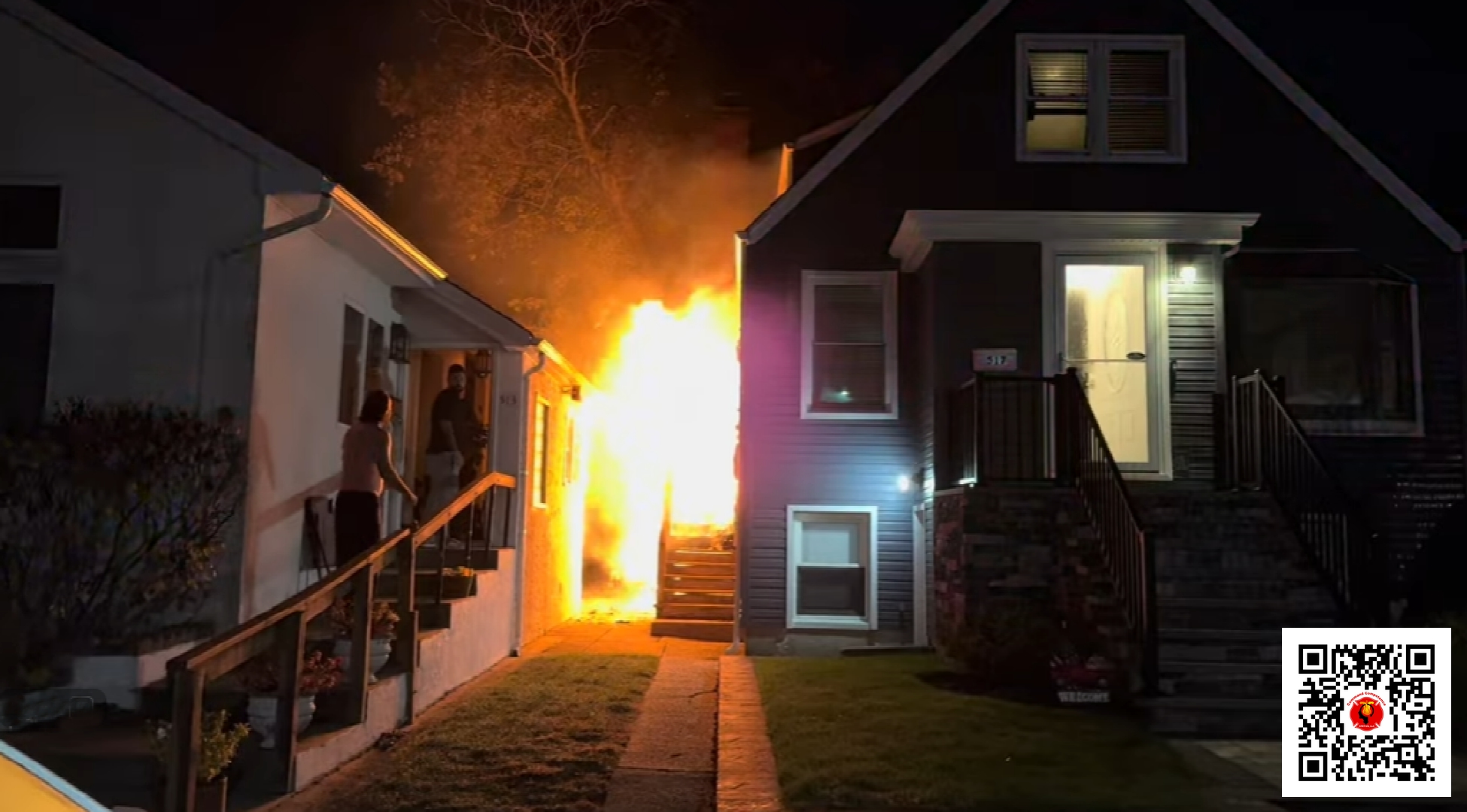
The first-arriving officer’s decisions set the pace for incident operations. As a result, water application to protect exposures and means of egress, crew deployment, ladder placement, and water supply are important considerations.
Decision Focus
This drill focuses on the first-arriving company officer’s strategy and tactical assignments. IC #1 must interpret dispatch information, occupancy, fire location, access, occupant reports, and exposure risk.
Then, the officer must communicate the initial radio report and assign their crew, Ladder 1, and Engine 2. The decision problem includes protecting egress, fire control, water supply, line placement, search profile, apparatus access, and resource determination.
Incident Video
The linked incident video show arrival conditions and initial fireground operations. Watch the assigned segments and decide what you would do as IC #1.
Because the video is shot from a single perspective, they may not provide complete operational context. Use them to examine fire location, egress control, water supply tactics, apparatus access, and time to effective water.
Important Lessons
This residential fire TDG reinforces that fires involving egress require fast, focused action. Fire blocking or threatening stairs, halls, and entry paths changes tactical priorities.
In addition, additional incident video illustrates how water supply tactics affect time to effective water. Reverse lay may work well in one operating context but create delay in another. The Additional Learning segment extends the drill through discussion of forward lay, dry forward lay, split lay, reverse lay, later-arriving reverse lay, and use of tank water.
What Does Good Look Like
Effective IC #1 performance begins with a clear size-up and practical strategy. The officer identifies the egress problem, confirms occupant information, and assigns companies by priority.
Good performance also includes context-based tactics. IC #1 selects water supply methods that support quick water, preserves ladder access when possible, and prepares a concise CAN report for command transfer.
Learn more about how to use 10-Minute Training and find additional tactical decision games in the 10-Minute Training Library.