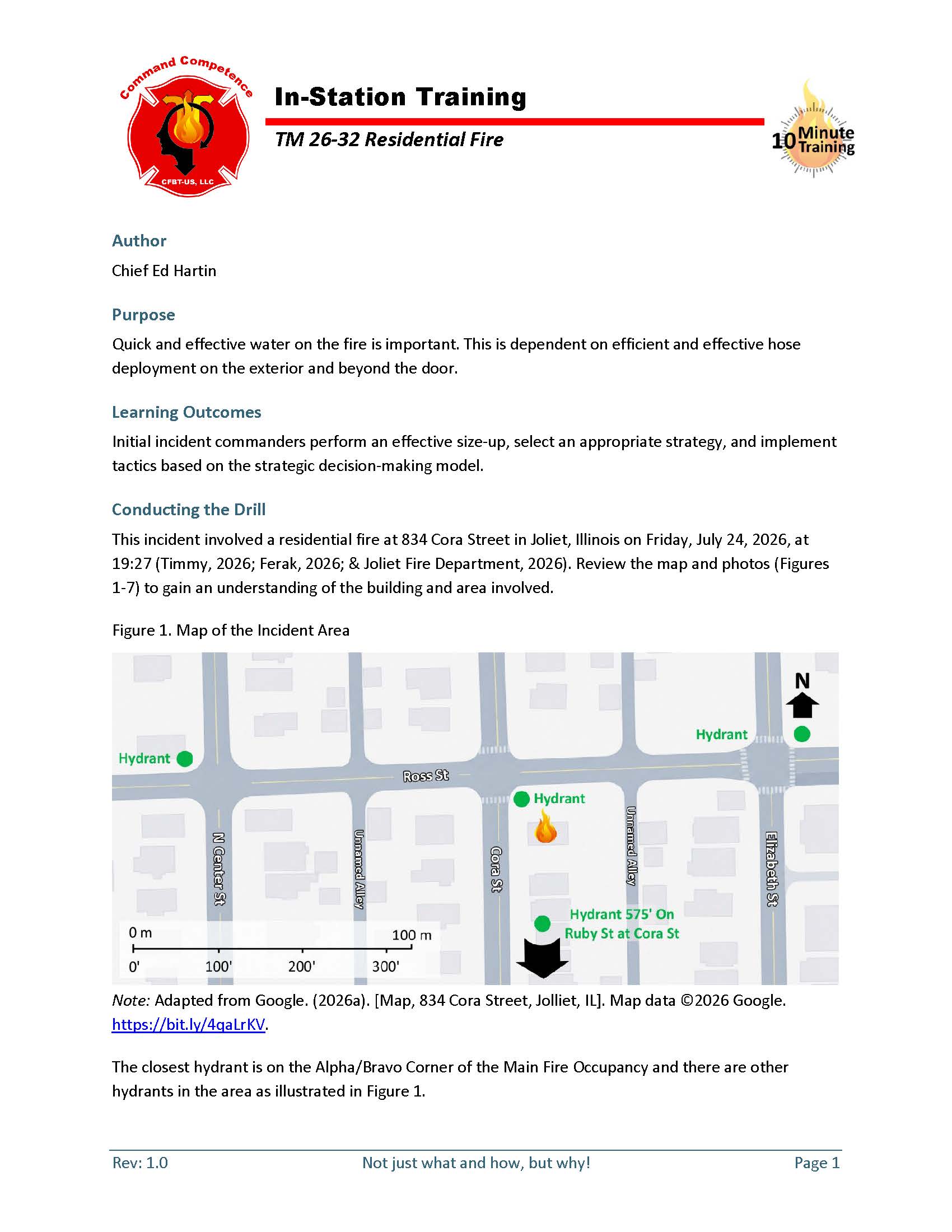
Residential Fire Tactical Decision Game
This residential fire tactical decision game (TDG) challenges the first arriving company officer working in the role of IC #1, to manage initial fireground actions at a house fire. This 10-Minute Training places you at 834 Cora Street in Joliet, Illinois. Dispatch reports smoke coming from the back of the house. You arrive from the south on Cora Street with a four-person engine company.
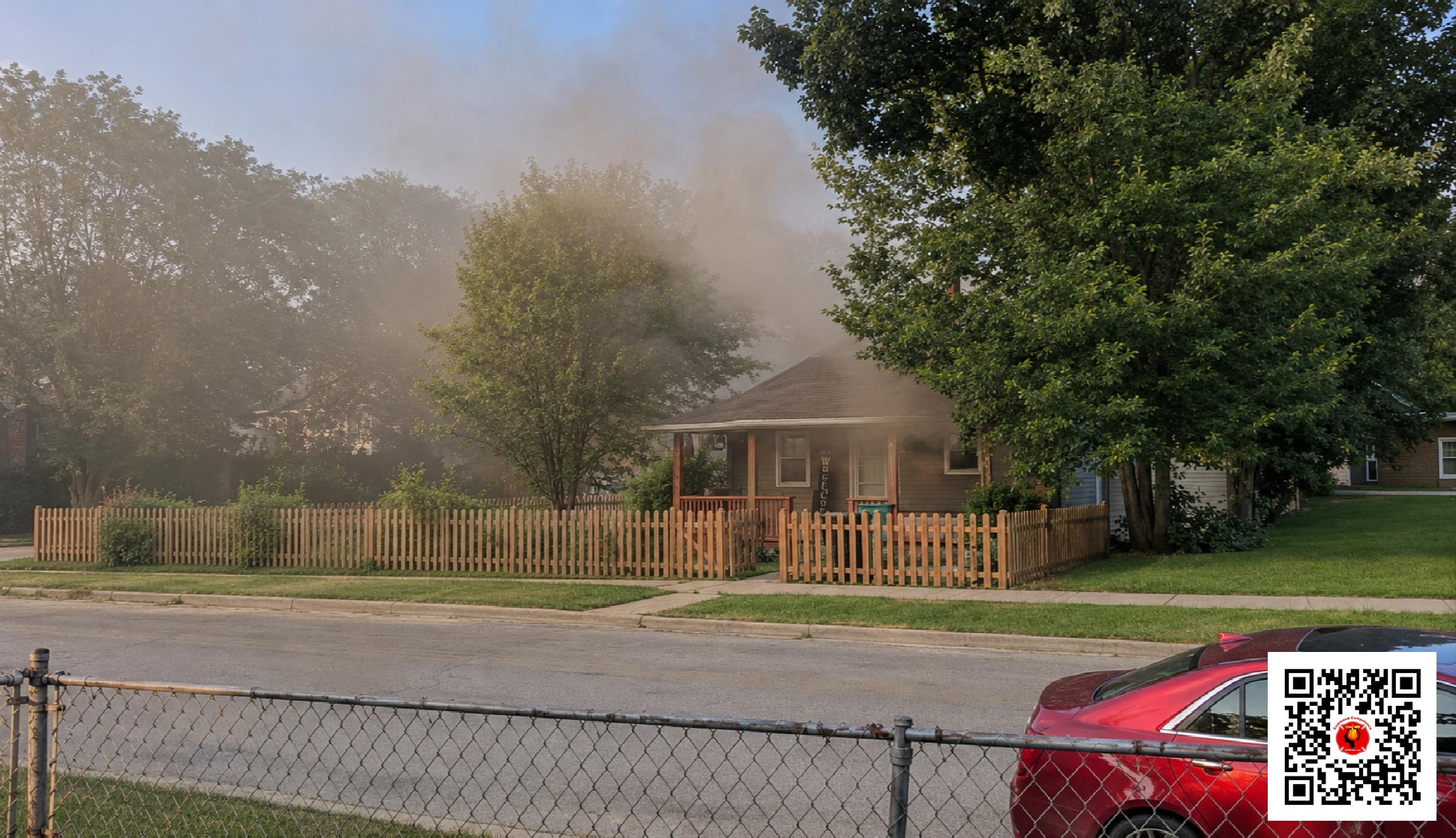
The incident requires a fast size-up and disciplined crew direction. Smoke is pushing from the eaves with moderate velocity. Smoke is also pushing from the sliding glass door, a nearby window, and the gable vent on Side Charlie. No smoke is visible from the lower Bravo window or rear door.
Decision Focus
IC #1 must determine the fire location, select an appropriate strategy, and quickly get effective water on the fire. The decision focus includes the initial radio report, task orders, hose deployment for fire control, search, ventilation, water supply, and command transfer.
Incident Video
The residential fire tactical decision game uses incident video to provide context for realistic decision-making. Watch the assigned video segments and examine the conditions on arrival. Then decide what actions you would take and what orders you would give.
Important Lessons
Quick and effective water on the fire depends on efficient hose deployment. The stretch must account for distance, available space, obstructions, entry point, and fire location.
This incident also supports discussion about changes in fire behavior indicators after the line moves through the front door. Those changes can indicate altered fire behavior and changing flow paths.
The Additional Learning segment extends the drill through hose deployment, door control, and interior operations videos. It also examines nozzle pattern, thermal assessment, door control, cooling techniques, and getting water on the fire faster.
What Does Good Look Like
Good performance includes a clear initial radio report, rapid crew direction, and efficient hose deployment. IC #1 should match tactics to conditions, coordinate ventilation, and prepare for command transfer.
Learn more about how to use 10-Minute Training and find additional tactical decision games in the 10-Minute Training Library.