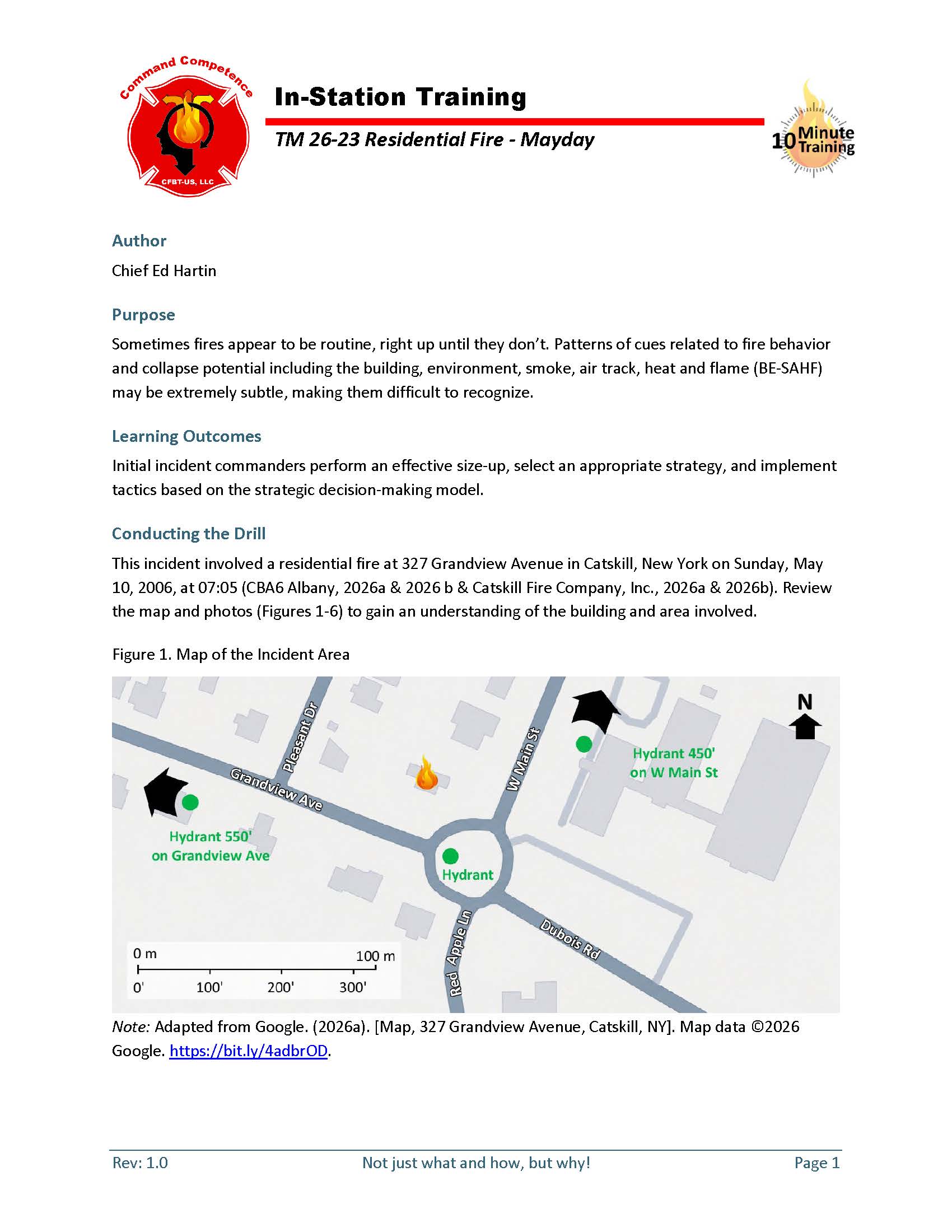
Residential Fire Tactical Decision Game
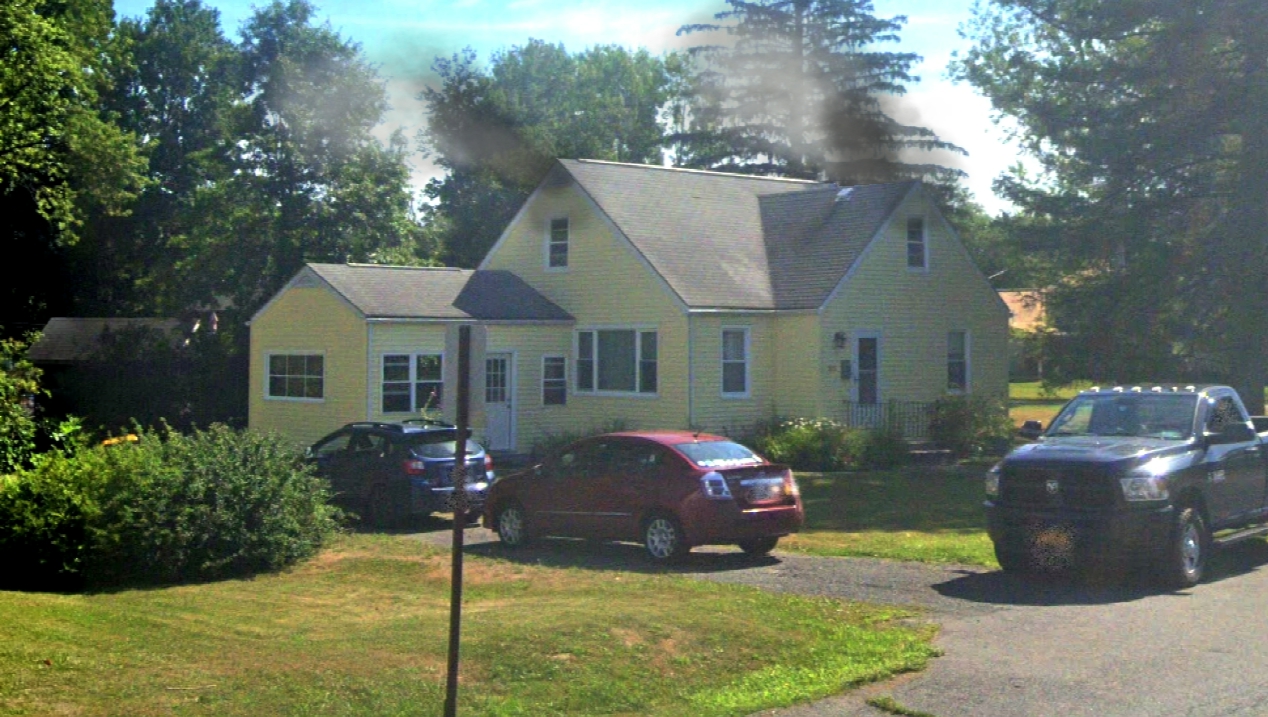
This residential fire tactical decision game (TDG) challenges IC #1 / company officers at a reported residential fire with subtle but serious hazards. The scenario begins with a first-arriving engine company at a residential structure fire in Catskill, New York. Conditions suggest a working fire, possible occupancy, and an urgent need to act.
However, the most important cues may not appear obvious at first. Smoke, air track, fire location, building layout, and collapse potential all shape the initial decision problem. Because the first company sets the tempo, early decisions influence search, fire control, firefighter safety, and command transfer.
The first-arriving officer must read conditions quickly. Then, they must match strategy, tactics, crew assignments, and communications to an uncertain and changing incident.
Decision Focus
This drill focuses on initial command decisions under pressure. The company officer must identify critical factors, anticipate conditions, and communicate a clear initial radio report.
Then, the officer must assign the crew, coordinate incoming companies, and reassess conditions. As the incident changes, IC #1 must recognize whether the original plan still fits. The decision problem becomes more complex when a firefighter mayday occurs during interior operations.
Incident Simulation Video and Incident Video
The simulation video provides prompts for IC #1 decisions during the incident timeline. Watch the video, pause when prompted, and decide what you would do as IC #1.
The incident videos extend the learning by showing the firefighter mayday and later firefighter reflections. Together, they support review of size-up, fire location, collapse cues, mayday communication, and tactical adaptation.
Important Lessons
This residential fire TDG reinforces how quickly a routine-appearing incident can change. Subtle BE-SAHF cues may point toward fire behavior, access, and collapse problems before those hazards become obvious.
In addition, the drill emphasizes the limits of sounding floors and stairs. Firefighters still need disciplined movement, but sounding does not guarantee structural stability. The Additional Learning segment extends the drill through mayday communications review and a focused discussion on why sounding the floor may be an unreliable indicator of structural stability.
What Does Good Look Like
Effective IC #1 performance starts with a clear size-up and disciplined communication. The officer identifies critical cues, gives task-specific assignments, and keeps strategy aligned with conditions.
However, good performance does not require perfect prediction. It requires reassessment, rapid communication, and action when the incident changes. When a mayday occurs, IC #1 must transmit clear information, support rescue priorities, and prepare for command transfer.
Learn more about how to use 10-Minute Training and find additional tactical decision games in the 10-Minute Training Library.