Strategy, Tactics, and Decision Making for Structural Firefighting
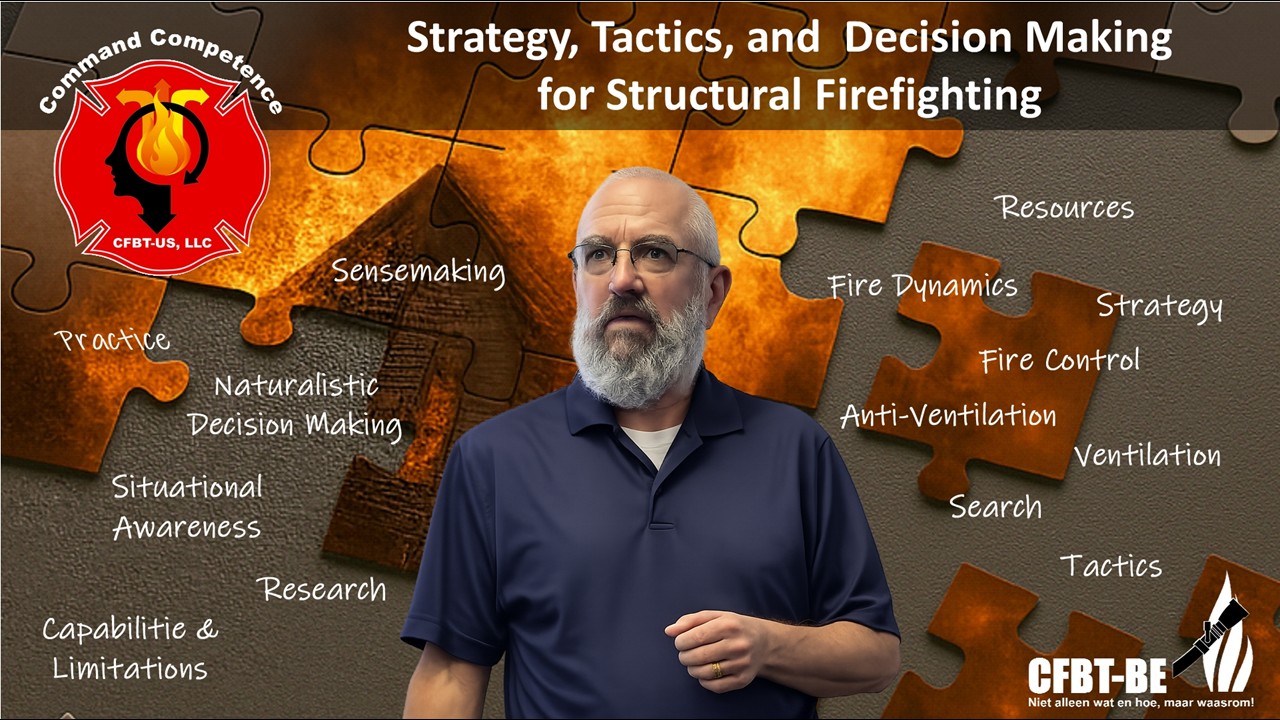
This five-day strategy, tactics, and command class was delivered in Belgium from June 15–19, 2026. The presentation is provided for participants who attended the course. It supports continued review of the major concepts, examples, tactical decision games, and discussion points used throughout the week.
The class examined structural firefighting through the interaction of fire behavior, building construction, operational capability, strategy, tactics, and command. The course emphasized the need to understand not only what firefighters and fire officers do, but why those actions matter under changing fireground conditions.
Course Focus
This presentation supports review of several major topics:
- Fireground context and changes in the fire service over time
- Fire dynamics and structural firefighting research
- NFPA 1700 and international best practices
- Fireground sensemaking and naturalistic decision making
- Strategy selection and tactical priorities
- Fire control, tactical ventilation, and search
- Accountability and management of fireground operations
- Incident organization, command transfer, divisions, and command support
- Tactical decision games and facilitated discussion
Important Lessons
The course used research, incident case studies, standards, and tactical decision games to connect theory with fireground practice. Participants considered how commanders interpret incomplete information, identify critical cues, select strategy, coordinate tactics, and manage risk. The presentation also reinforced the importance of clear communication, command presence, accountability, and coordinated operations.
What Does Good Look Like?
Effective fireground performance requires more than task completion. Good performance includes accurate size-up, anticipation of changing conditions, clear strategy, disciplined tactics, effective communication, and command organization that matches incident complexity. This strategy, tactics, and command class challenges officers to keep asking, “What does good look like?” and to connect fireground decisions with the conditions, resources, risks, and tactical priorities present at the incident.
Access Note
This presentation is intended for participants who attended the Belgium 2026 Strategy, Tactics, and Decision Making for Structural Firefighting class. The PDF is provided as a course reference for review and continued professional development.