Earlier this week one of Command Competence’s 10-Minute Training subscribers posed a question about task level TDGs (tactical decision games).
Interesting Question
Earlier this week one of Command Competence’s 10-Minute Training subscribers posed a question about task level TDGs (tactical decision games).
What I am wondering is can TDGs be applied to fireground skills for helping backstep firefighters work through on-scene problems? I currently have a probationary firefighter who is struggling with the thinking side of things, particularly when things don’t go exactly to plan. One such scenario is working through a frozen hydrant or hydrant caps, going through the steps to resolve the problem.
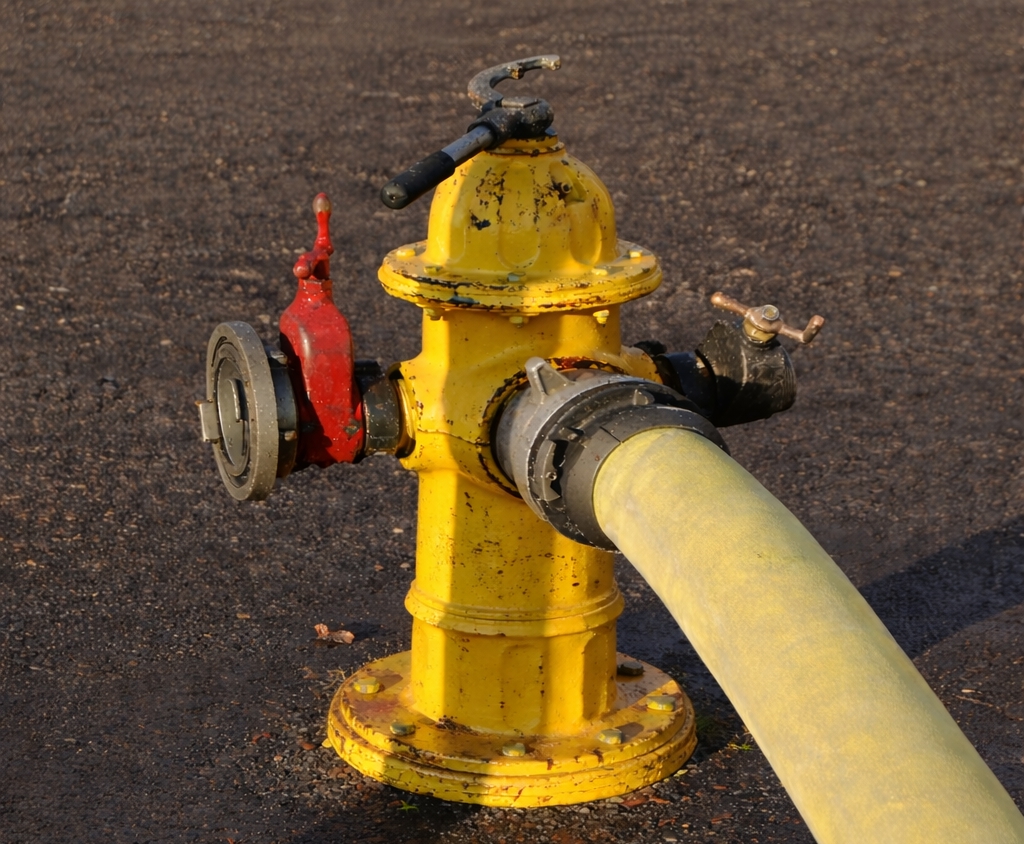
My answer was absolutely! This is exactly the kind of thinking that task-level TDGs are designed to develop. There is great support for this in the literature related to tactical decision games (TDGs) and I have applied this concept informally in conjunction with 10-Minute Training for IC #1 for over 10-years. Let’s see why task-level TDGs make sense and how to apply this concept with the firefighters you work with.
Why Task-level TDGs are Useful
TDGs are all about developing decision making skills. The same underlying principles that make TDGs a great tool for developing an incident commander’s skills make them a useful tool to develop firefighters’ individual task-level decision skills. In practice, task-level TDGs allow instructors to isolate a single decision, slow down the thinking, and make the invisible cognitive work visible.
TDGs develop the participant’s ability to build situational awareness, problem recognition, and decision making skills. John Schmitt (2023) observes that this is ideally accomplished using a high cognitive fidelity and the lowest necessary level of physical fidelity. Physical fidelity describes how realistic the simulation environment looks. Cognitive fidelity is the realism of the decisions and judgements that simulation requires.
A kitchen-table TDG has low physical fidelity but can still have very high cognitive fidelity when the decisions feel real. Let’s use the example provided by the subscriber:
Taking a Hydrant
A firefighter taking a hydrant cannot get the caps off to connect hydrant valves and the supply line. What task-level decisions and judgements must this firefighter make under time pressure? Let’s assume that their standard hydrant connection is two hydrant gates on the 2 ½” outlets and a 5” supply line connected to the large outlet using a threaded female to Storz adapter. The hydrant firefighter must quickly answer questions such as:
- What action will they take if the cap does not come off immediately?
- How long will I work on the frozen cap, before abandoning the effort and going on to the next outlet?
- What action will I take if the next cap is frozen?
- What if all the caps on the hydrant are frozen and methods normally used to quickly “unfreeze” them are unsuccessful? What will I do next?
- Do I need to communicate this problem to the IC?
- How will I communicate this information (e.g., priority traffic; conditions, actions, and needs).
- If only one 2 ½” outlet is usable, can I connect the 5” supply line to that outlet?
- What impact would using a single 2 ½” outlet have on water supply?
- Would I communicate that a single 2 ½” outlet is being used?
- What will I do if the hydrant is completely frozen and cannot be opened?
This brief list shows that, even during a simple task like taking a hydrant, firefighters must quickly make multiple decisions that require an understanding of the underlying impacts and implications of their actions (or inaction).
Task-level TDGs
Now let’s dig into what a task-level TDG might look like:
Setting
You can run this TDG in the kitchen, day room, or apparatus bay with no equipment.
Set the Context
When you set the context for this task-level TDG, provide just enough information to situate the firefighter in a realistic situation.
It is February 5th. You are the hydrant firefighter on Engine 2 and have responded to a residential fire. Engine 1 arrived first and reported a working fire. The temperature is 28oF and there are several inches of snow on the ground.
As you stop at the hydrant, you hear that Engine 1 is stretching an attack line through Side Alpha for fire control and primary search and Ladder 1 assigned to primary search. The IC has assigned your company to forward lay from a hydrant to Engine 1.
You get out of the engine secure the hose and appliances needed to take the hydrant and tell the apparatus operator to “lay in”. You will have 90 seconds to decide and state your actions.
Decision Prompts and Communication
Decide and state the action that you will take. If you communicate over the radio, state the communication exactly as you would transmit it? I will role-play the person you are communicating with (e.g., either the engineer, your officer, or the IC).
Actions, Decisions, and Communication
In the next phase, the TDG asks the firefighter to make individual, task-level decisions under time pressure. Use the following information and prompts as the hydrant firefighter works through this task-level TDG:
- Visualize taking the hydrant and describe the steps you will take, in the order that you will take them.
- When the firefighter begins to remove the first cap from the hydrant, tell them they find it frozen.
- If they try alternative methods to remove the cap, tell them that they are unsuccessful.
- If they proceed to another hydrant cap, repeat the same information (they are unable to remove the cap).
- Continue this process until they have attempted, unsuccessfully, to remove any of the hydrant caps.
Note: Your normal hydrant connection may shorten this sequence (can you connect to either the large or 2 ½” outlets, or only the large outlet)..
Key Point: As soon as the firefighter recognizes they cannot establish a continuous water supply, they must advise the IC using priority traffic with a clear CAN (conditions, actions, needs) report identifying the need to take a different hydrant.
Alternative: You can also run this task-level TDG so that the firefighter cannot remove the large cap but can remove one or more of the 2 ½” caps. This creates different ways to solve the problem depending on the appliances available to the firefighter. For example, if the firefighter does not have a 2 ½” × 5” Storz adapter, you might have to assign another engine to assist by providing the adapter or by taking the hydrant and pumping the supply line.
Discussion
Now walk back through the firefighter’s actions and probe their decisions and actions as they complete this task-level TDG? Use what, how, and who (rather than why) questions like the following:
- What did you think about as you were attempting to take the hydrant?
- How might the frozen caps impact fireground operations?
- If they did not attempt alternative methods to remove the caps, ask “What other things could you have tried to remove the caps”?
- If you had been able to remove one or more of the 2 ½” caps, how could you have established a water supply to Engine 1? The answer to this will vary depending on the resources available to the hydrant firefighter.
- What information does the IC need to address water supply if the hydrant is inoperative?
Learn From Expert Answers
Have more experienced members of the company perform the same task-level TDG and think aloud as they work through the challenges presented. This helps the firefighter compare their reasoning with expert thinking, not just the final answer.
Get the Reps
Repeat the task-level TDG, changing up the problem presented:
- One 2 ½” cap is frozen.
- Both 2 ½” caps are frozen.
- The hydrant is frozen.
- The operating stem has broken.
Next Steps
Repeat this scenario when on the drill ground and the firefighter is taking a hydrant. Instructors can develop firefighters’ cognitive skills using low-physical-fidelity, task-level TDGs. For some tasks, however, doing the work while thinking presents a different challenge. In this case, it is easy to integrate both cognitive and skills training. Firefighters often find it more challenging when instructors combine high physical fidelity with high cognitive fidelity early in the learning process.
Task-level TDGs provide a powerful, low-physical-fidelity way to build cognitive skills before adding the complexity of real-world performance. Read Introduction to 10-Minute Training (Hartin, 2026) to learn more about how to use TDGs to develop IC #1’s and IC #2’s command competence. For a deeper dive into the origins of tactical decision games, have a look at John Schmitt’s (2002) Mastering Tactics. Consider adding some task-level elements when completing 10-Minute Training Tactical Decision Games for IC #1. Visit the 10-Minute Training Library for a range of TDGs for IC #1 and IC #2 that can also provide realistic context for informal task-level TDGs.
References
Schmitt, J. (2023). Can simpler technology produce better learning outcomes? Retrieved February 5, 2025, from https://bit.ly/4qlxRTh.
Schmitt, J. (2002). Mastering tactics. Retrieved February 5, 2025, from, from https://bit.ly/2WHjHAB.
Hartin, E. (2026). 26-00 Introduction to 10-Minute Training. Retrieved February 5, 2025, from https://bit.ly/4tliM6L.