Commercial Fire Tactical Decision Game
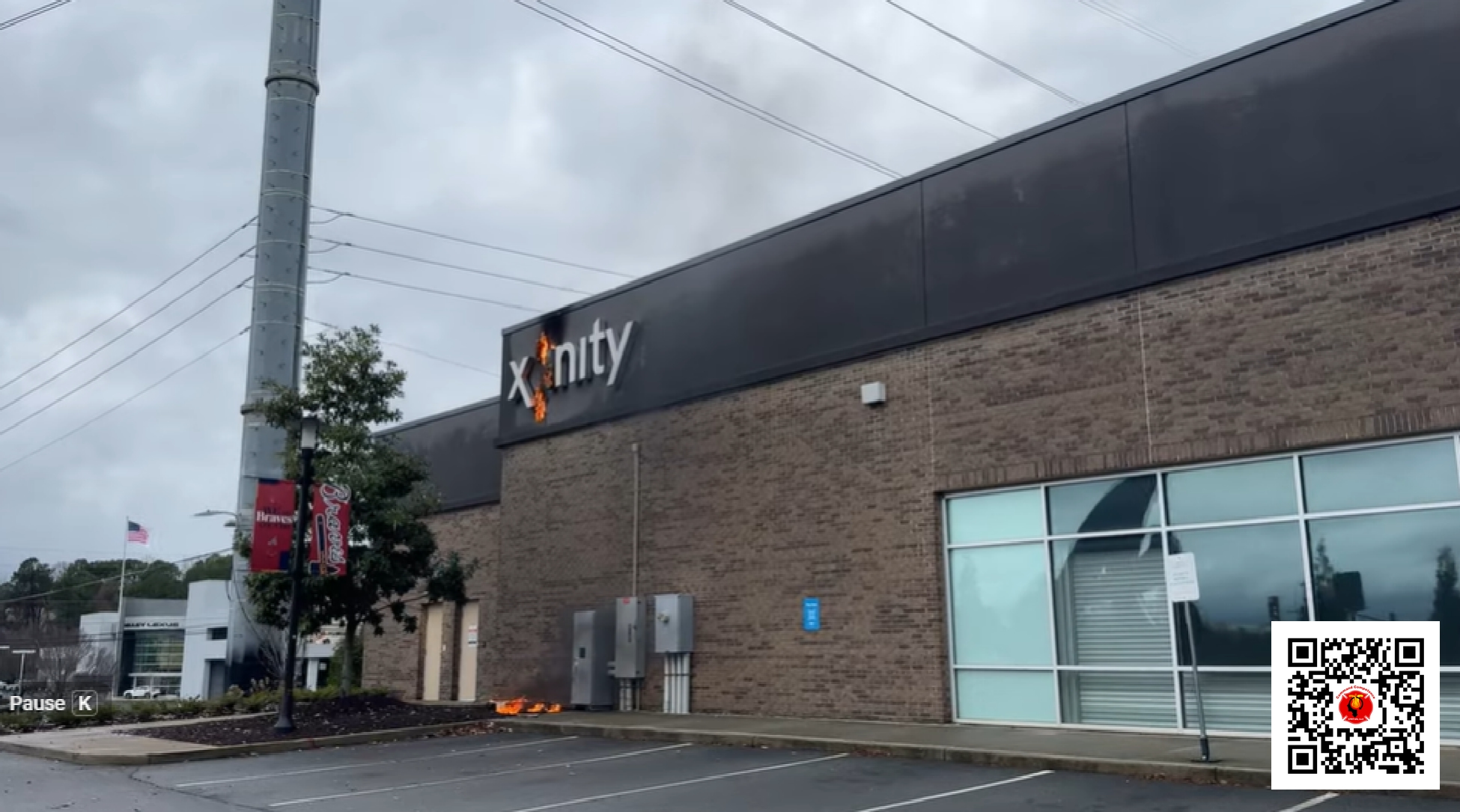
This commercial fire tactical decision game (TDG) places company officers in the role of IC #1 at an exterior fire involving a commercial occupancy in Atlanta, Georgia. The incident involves a lighted sign on fire, possible electrical hazards, access considerations, and potential extension into concealed structural void spaces.
However, the first-arriving officer must avoid treating the incident as a minor exterior fire. Fire involving signs, exterior finishes, and void spaces can extend before conditions look severe. Therefore, IC #1 must control the fire and confirm whether extension has occurred.
The first-arriving officer’s decisions set the pace for incident operations. As a result, attack position, utility control, roof access, checking extension, are important considerations.
Decision Focus
This drill focuses on the first-arriving company officer’s initial strategy and tactics. IC #1 must interpret dispatch information, arrival conditions, building layout, electrical hazards, and potential for extension.
Then, the officer must communicate the initial radio report and assign their crew, Ladder 1, and Engine 2. The decision problem includes fire control, electrical hazard control, checking the roof, checking interior extension, water supply, and resource determination.
Incident Video
The linked incident video shows arrival conditions and early fireground operations at the commercial occupancy. Watch the assigned video segments and decide what you would do as IC #1.
Because the video comes from an actual incident, it may not provide complete operational context. Use it to examine exterior fire control, electrical hazards, company assignments, and extension checks.
Important Lessons
This commercial fire TDG reinforces that small exterior fires can create larger problems. Sign fires and exterior electrical equipment require fire control and a deliberate check for extension.
In addition, the drill emphasizes the difference between water application and overhaul risk. Electrical hazards may present differently during suppression, investigation, and overhaul. The Additional Learning segment extends the drill through review of electrical hazards, water streams, and utility control procedures.
What Does Good Look Like
Effective IC #1 performance begins with a clear size-up and practical strategy. The officer identifies the electrical hazard, controls the exterior fire, and assigns crews to check extension.
Good performance also includes disciplined follow-up. IC #1 confirms conditions, coordinates incoming companies, changes the resource determination if conditions warrant, and prepares a concise CAN report before command transfer.
Learn more about how to use 10-Minute Training and find additional tactical decision games in the 10-Minute Training Library.