Related Keyphrase: Mixed-use Fire TDG
Mixed Occupancy Fire Tactical Decision Game

This mixed-occupancy fire tactical decision game (TDG) places IC #1 / company officers at a fire in Beauraing, Wallonia, Belgium. The incident involves a large residential building with professional office space with flames and smoke from the roof, and limited hydrant flow.
The company officer must consider building construction, fire location, access, water supply, and offensive capability. Therefore, the initial strategy must match conditions and resource capability.
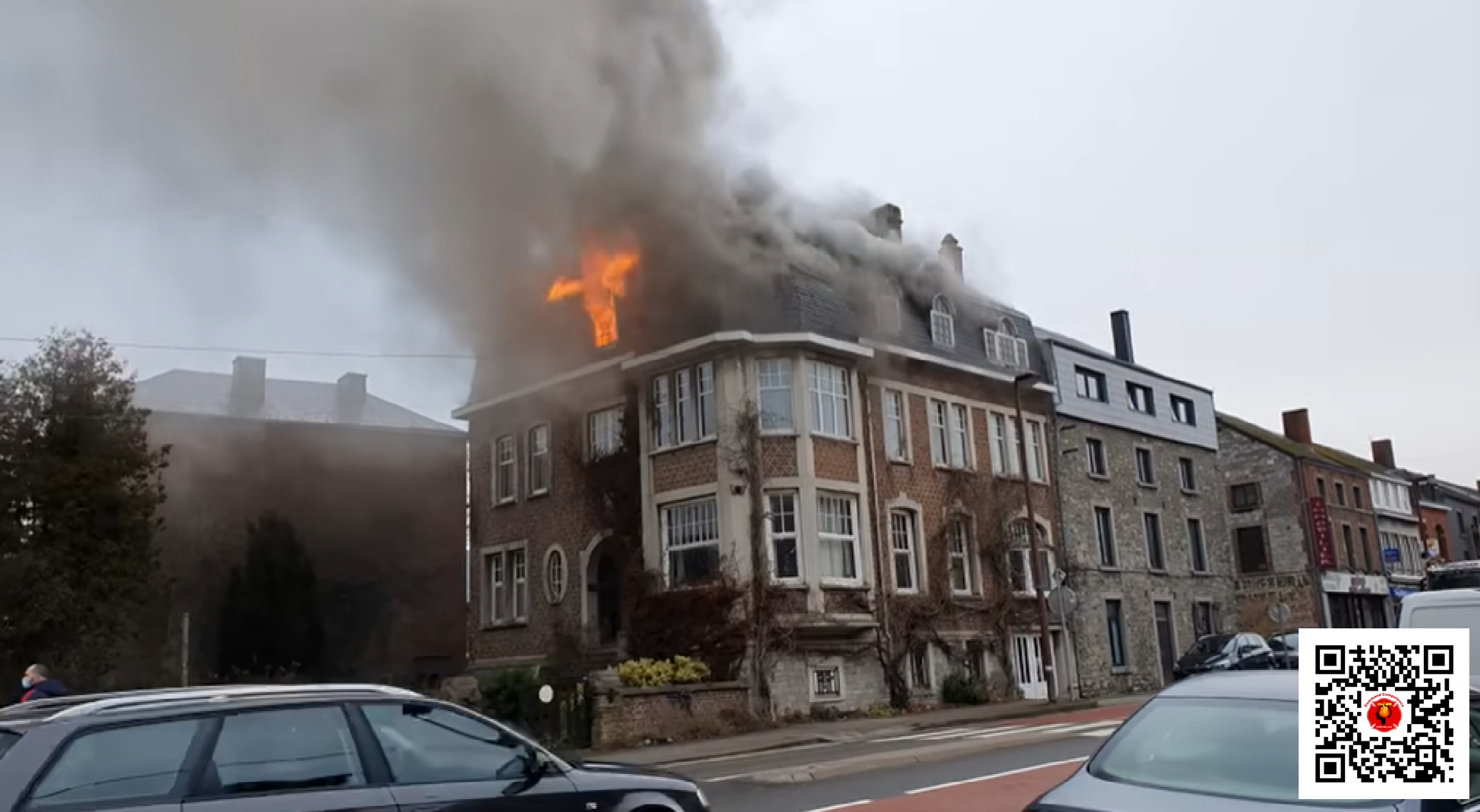
Early decisions matter because the first-arriving engine sets the operational tempo. In addition, building construction, fire behavior, and resource capability (including water supply) impact strategic and tactical decisions.
Decision Focus
This drill focuses on the first-arriving company officer’s initial strategy. IC #1 must interpret dispatch information, reports of fire from the roof, visible conditions, building construction, fire conditions, and knowledge of water supply in the area.
Then, the officer must communicate the initial radio report and assign their crew, the first water tender, and the aerial ladder before transfer of command. The decision problem includes selection of strategy, initial tactics, and apparatus placement as well as ongoing assessment of incident conditions.
Incident Video
The incident video shows arrival conditions, fire extension, initial offensive operations, and later master stream use. Watch the video, pause when prompted, and decide what you would do as IC #1.
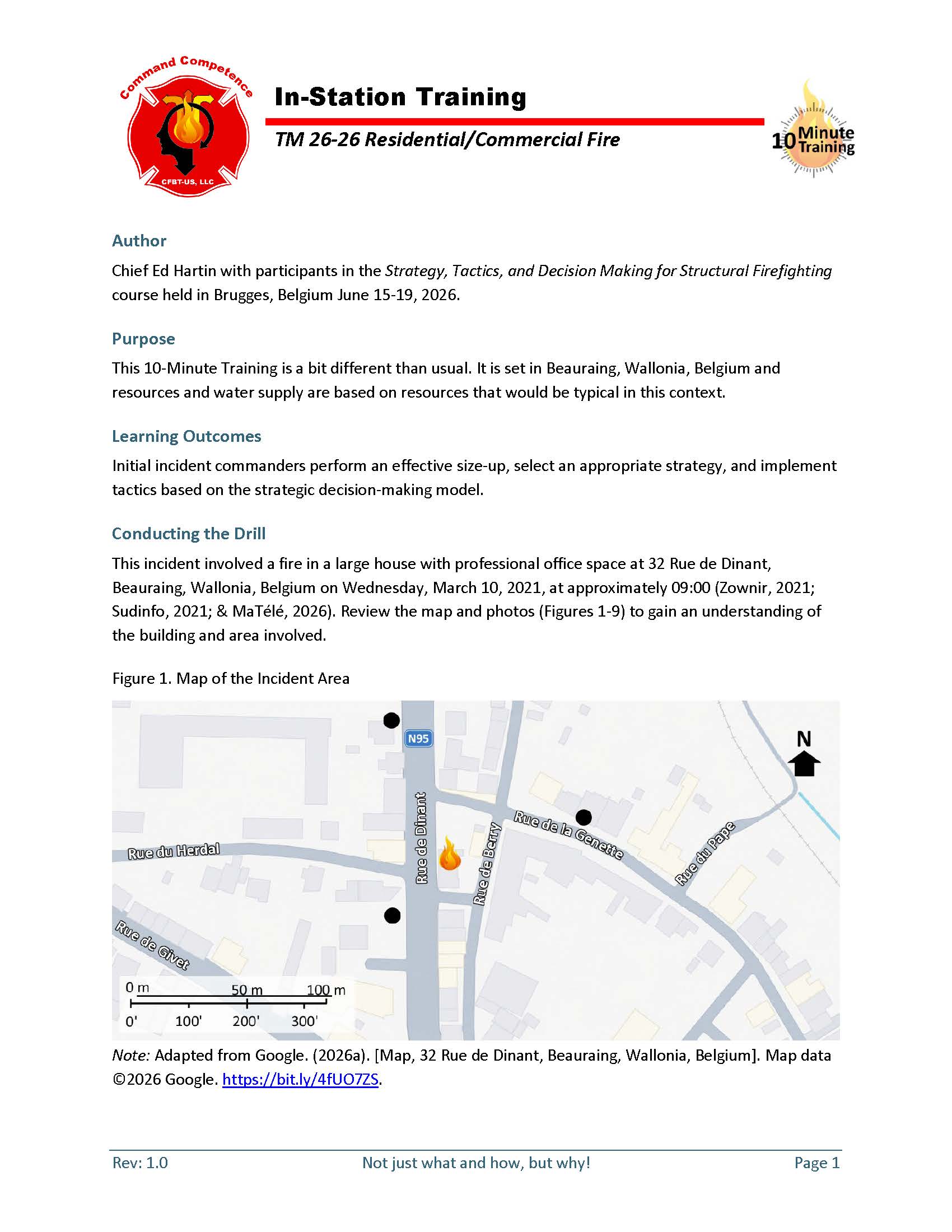
Before answering, study the map, preplan view, street views, and arrival images. Together, they support size-up of access, construction, water supply, apparatus placement, and tactical options.
Important Lessons
This mixed-use fire TDG reinforces how construction, fire location, and water supply shape early strategy. Mansard roof construction can conceal fire extension and complicate offensive fire control.
In addition, the drill emphasizes resource capability in a different operating context. Low-flow hydrants, water tenders, and open water supply tactics change the first-arriving officer’s problem. The Additional Learning segment extends the drill through examination of mansard roof construction, review of tactical options, and water supply problem-solving.
What Does Good Look Like
Effective IC #1 performance starts with a clear size-up and a realistic strategy. The officer recognizes roof involvement and the impact of building construction, prioritizes tactical assignments, and develops water supply to fire flow demand.
Good performance also requires adaptation. When conditions change, IC #1 updates the plan, communicates needs, and prepares for command transfer.
Learn more about how to use 10-Minute Training and find additional tactical decision games in the 10-Minute Training Library.